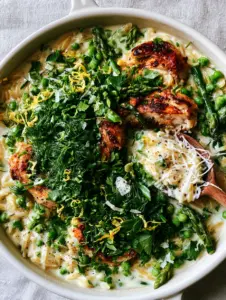
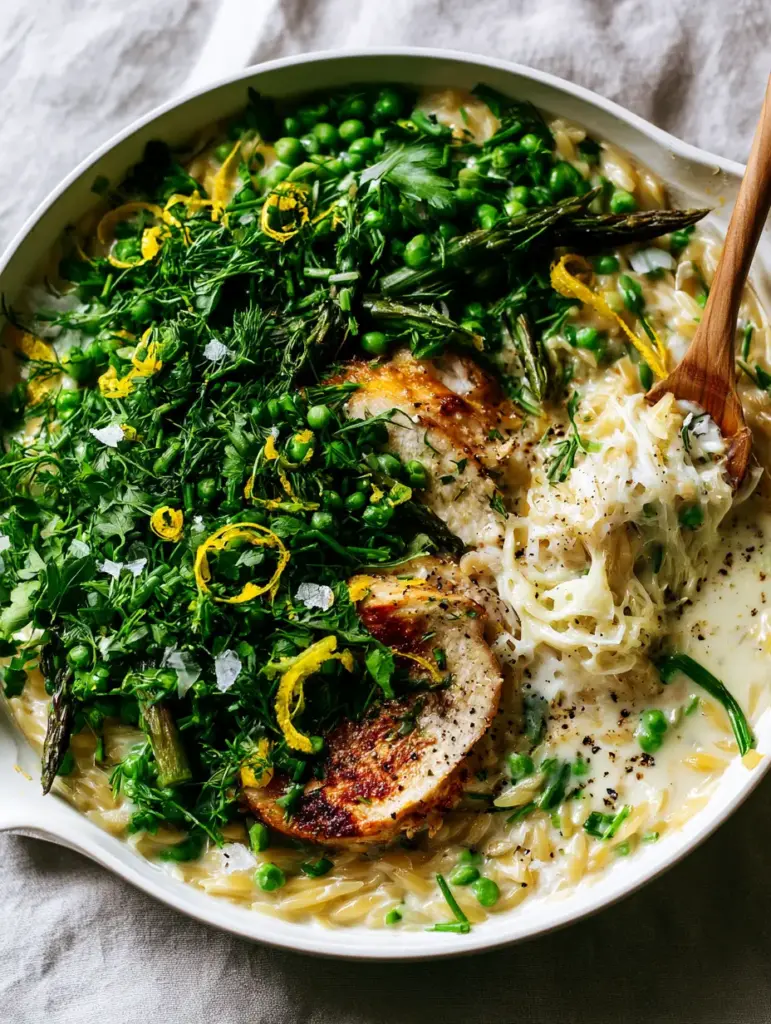
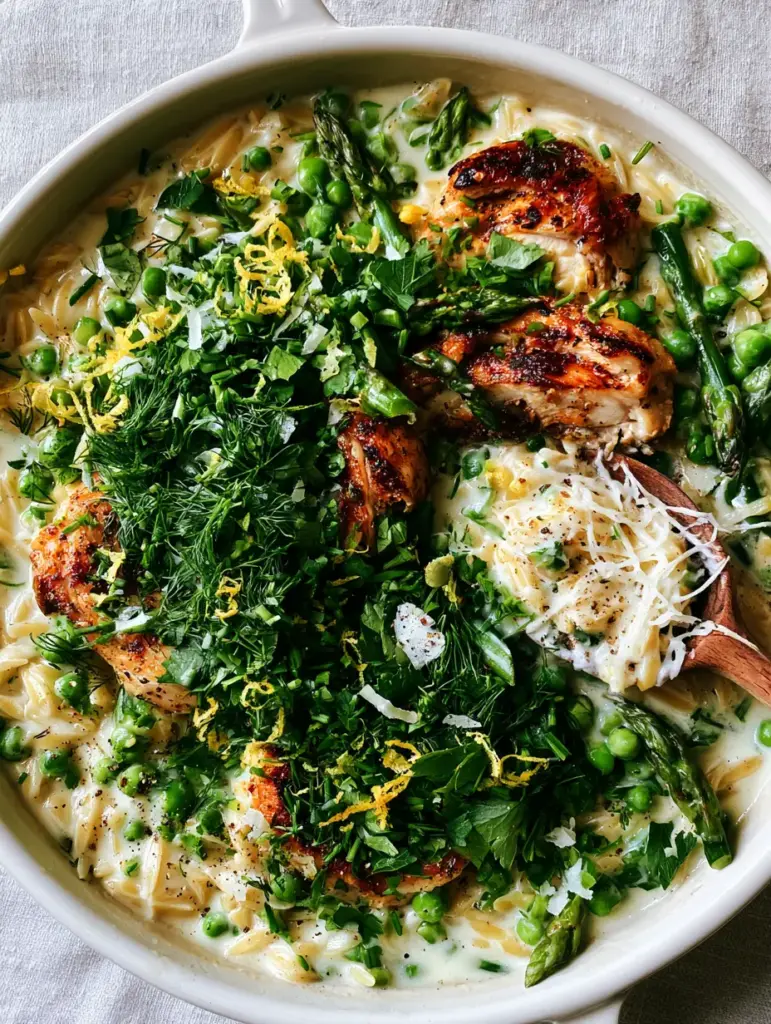
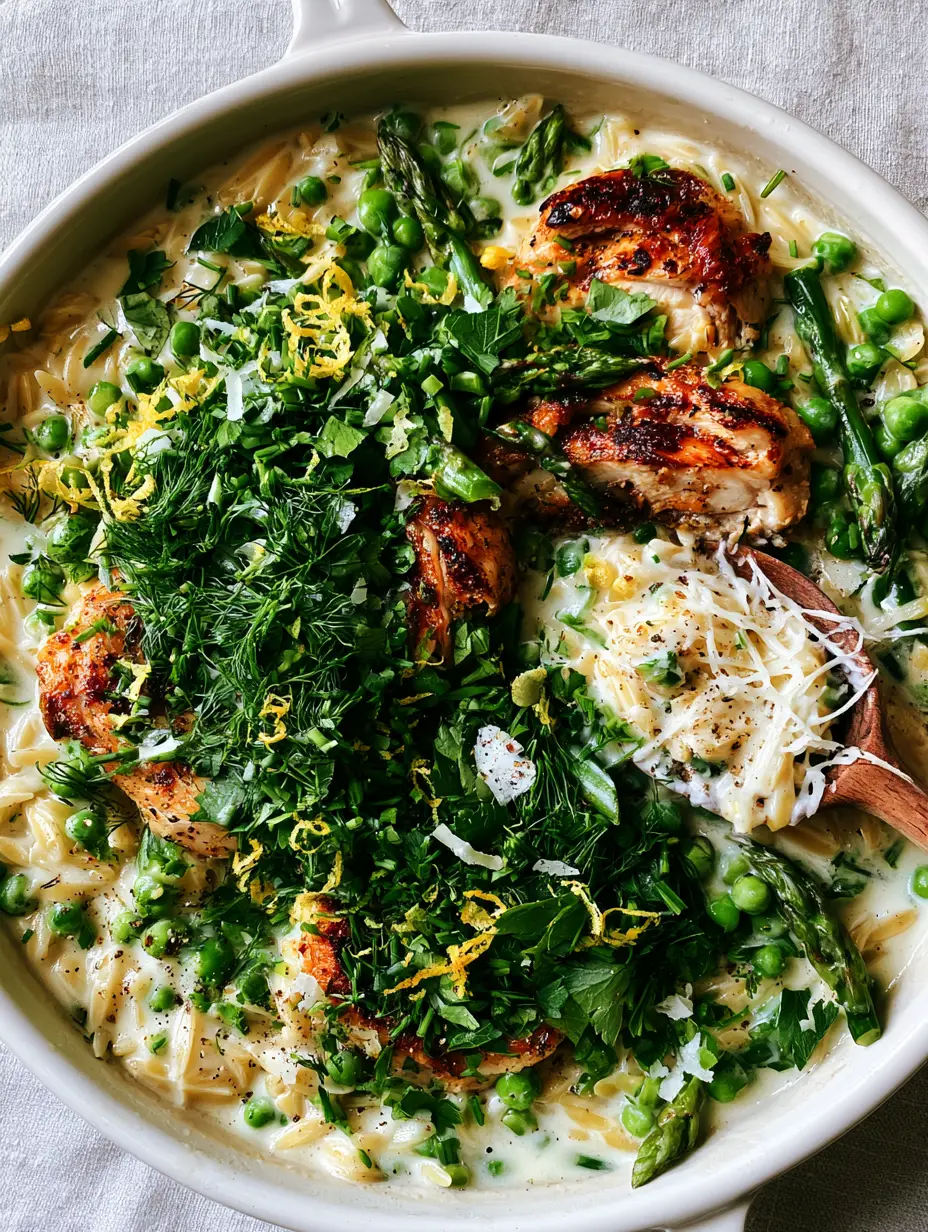
There is a specific kind of magic that happens when the bright, awakening flavors of spring meet the soul-warming comfort of a velvety pasta dish. This creamy spring herb chicken orzo is the culinary embodiment of that transition, offering a luxurious, one-pan experience that looks as vibrant as it tastes. Imagine thick, juicy slices of seared chicken breast with perfectly crispy, golden-brown edges resting atop a bed of glossy orzo pearls, all coated in a shimmering lemon-garlic cream sauce.
Every spoonful of this creamy spring herb chicken orzo delivers a structural symphony of textures. You get the snap of blanched asparagus tips, the pop of sweet garden peas, and the aromatic “massive shower” of fresh dill, chives, and parsley that cuts through the richness of the parmesan. It is a dish designed for those who appreciate the finer details, from the curls of bright yellow lemon zest to the crunch of coarse cracked black pepper and flakes of Maldon sea salt.
Why You Will Love This Vibrant Spring Skillet
- Textural Contrast: The combination of succulent, golden-seared chicken against the “velvety, glossy orzo” creates a high-end restaurant mouthfeel at home.
- Herb-Forward Profile: Unlike heavy winter pastas, this recipe uses a trio of dill, chives, and parsley to keep every bite light and refreshing.
- Visual Masterpiece: With its vibrant greens and bright yellow zest, this dish is a showstopper that looks exactly like a professional food photograph.
- One-Pan Efficiency: While the flavors are complex, the method is streamlined, making it perfect for an elevated weeknight dinner.
The Anatomy of Flavor: Ingredients and Substitutions
Chicken Breasts: 1.5 lbs (680g) of boneless, skinless breasts provide the lean protein base. Searing them whole before slicing ensures they retain their juices while developing that essential golden-brown crust.
Orzo Pasta: 1.5 cups (300g) of dried orzo. These rice-shaped pasta pearls are ideal for absorbing the lemon-cream sauce while maintaining a distinct, silky texture.
Heavy Cream: 1/2 cup (120ml) creates the velvety, glossy finish described in our visual blueprint. You can substitute with full-fat coconut milk for a dairy-free twist, though the flavor profile will shift.
Chicken Broth: 3 cups (720ml) of low-sodium broth. This serves as the primary cooking liquid for the orzo, infusing the pasta with deep savory notes.
Fresh Asparagus: 1 bunch (approx. 225g), trimmed into bite-sized tips. These provide the “vibrant green” visual and a necessary crunch to balance the soft pasta.
Garden Peas: 1 cup (150g) of fresh or frozen peas. These add a natural sweetness and a pop of color that defines a true spring dish.
The Herb Trio: 1/4 cup (10g) each of fresh dill, chives, and flat-leaf parsley. Do not skimp here; the “massive shower” of herbs is what elevates the dish from a standard pasta to a gourmet spring feast.
Parmesan Cheese: 1/2 cup (45g) finely grated for the sauce, plus extra shaved parmesan for the garnish. This provides the “stringy melted texture” visible when lifting a spoonful.
Aromatics & Seasoning: 4 cloves of minced garlic, 1 tbsp (6g) lemon zest, Maldon sea salt, and coarse cracked black pepper. These invisible foundations provide the aromatic backbone and final seasoning flourishes.
Essential Tools for the Perfect Creamy Spring Herb Chicken Orzo
To achieve the professional results seen in the luxury ceramic skillet photos, you need a high-quality cooking vessel. A large stainless steel skillet or a ceramic-coated pan is ideal for achieving an even sear on the chicken without sticking. You will also need a sharp chef’s knife for the precise chopping of the herb trio and a microplane zester to create those delicate lemon curls.
A wooden spoon is highly recommended for stirring the orzo. As the pasta releases its starches, the wooden spoon helps you scrape the flavorful “fond” (browned bits) from the bottom of the pan, integrating it into the sauce for maximum depth.
Mastering the Sear and the Simmer: Step-by-Step Instructions
Phase 1: The Golden Chicken Sear
Pat the chicken breasts dry with paper towels—moisture is the enemy of a good sear. Season generously with kosher salt and cracked black pepper. Heat 2 tbsp (30ml) of olive oil in your skillet over medium-high heat. Once the oil shimmers, add the chicken and sear for 5-6 minutes per side until a deep golden-brown crust forms. Remove the chicken to a plate to rest; it will finish cooking later in the residual heat of the sauce.
Phase 2: Developing the Aromatic Base
In the same skillet, add a touch more oil if needed and sauté the minced garlic for 30 seconds until fragrant but not browned. Add the dried orzo to the pan and toast it for 1-2 minutes. This “toasting” step is a secret technique used in many quick recipes to add a nutty dimension to the pasta and prevent it from becoming mushy.
Phase 3: The Velvety Orzo Simmer
Pour in the chicken broth and a squeeze of fresh lemon juice. Bring the mixture to a gentle simmer, then reduce the heat to medium-low. Stir frequently to prevent the orzo from sticking to the bottom. As the liquid absorbs, the orzo will transform into “velvety, glossy pearls.” When the orzo is nearly al dente (about 8 minutes), stir in the heavy cream and the finely grated parmesan cheese.
Phase 4: Incorporating the Spring Greens
Add the blanched asparagus tips and garden peas to the skillet. Stir gently to incorporate them into the lemon-cream sauce. The residual heat will warm the vegetables through while maintaining their bright, vibrant green color. Slice the rested chicken into thick strips and nestle them back into the pan, ensuring those crispy edges are visible.
Phase 5: The Grand Herb Finale
Just before serving, sprinkle the “massive shower” of fresh dill, chives, and parsley over the entire dish. Garnish with bright yellow lemon zest curls, flakes of Maldon sea salt, and an extra crack of black pepper. The final result should show stringy melted parmesan as you lift a portion with your wooden spoon.
Expert Tips for Culinary Success
- Don’t Overcrowd the Pan: When searing the chicken, give each breast space. If the pan is too full, the chicken will steam instead of developing that crispy golden crust.
- Stir for Starch: Treat orzo similarly to risotto. Frequent stirring helps release the starches, which emulsifies with the cream and broth to create a naturally thick sauce.
- The “Cold Herb” Rule: Always add your fresh herbs at the very end. Heat destroys the delicate oils in dill and parsley; adding them last ensures their flavor remains punchy and bright.
- Blanch for Color: If you want the asparagus to be as “vibrant green” as the photos, flash-boil them for 60 seconds then plunge into ice water before adding them to the pasta.
Storage, Reheating, and Make-Ahead Advice
Creamy spring herb chicken orzo is best enjoyed immediately to appreciate the “glossy” texture of the sauce. However, leftovers can be stored in an airtight container in the refrigerator for up to 3 days. Please note that orzo continues to absorb liquid as it sits, so the sauce will thicken significantly in the fridge.
To reheat, place the portion in a small saucepan over medium-low heat. Add a splash of chicken broth or a tablespoon of water to loosen the sauce and restore its velvety consistency. Avoid the microwave if possible, as it can cause the cream sauce to break and become oily.
What to Serve With This Elegant Skillet Meal
This dish is a complete meal on its own, but it pairs beautifully with a light, acidic side to cut through the creaminess. A simple arugula salad with a lemon vinaigrette and a side of garlic bread is a classic choice. If you are looking for more pasta inspiration with bold flavors, consider trying our creamy cajun pasta for a spicy contrast.
For those who love one-pan comforts but want to explore different cuisines, this recipe shares the same satisfying heartiness as a well-made chicken casserole. The versatility of chicken and starch is endless!
Frequently Asked Questions
Yes! Boneless, skinless chicken thighs work beautifully. They may require 2-3 extra minutes of searing time but will yield a very juicy result that pairs well with the lemon-cream sauce.
Frozen peas work perfectly—add them directly to the pan at the end. For asparagus, fresh is highly recommended to maintain the crisp-tender ‘vibrant green’ texture visible in the blueprint.
Toasting the dry orzo in the skillet with garlic before adding the liquid creates a protective barrier that helps the pasta maintain its structure and achieve that ‘glossy pearl’ texture.
You can use half-and-half or whole milk, though the sauce will be thinner. If you use milk, consider whisking in a teaspoon of cornstarch to maintain the velvety consistency.
Wash dill and parsley in cold water and spin them completely dry. Any moisture on the herbs will cause them to clump rather than create that beautiful ‘massive shower’ effect.
The Ultimate Creamy Spring Herb Chicken Orzo Recipe
Creamy Spring Herb Chicken Orzo with Lemon and Parmesan
Ingredients
Equipment
Method
- Season chicken with salt and pepper. Heat olive oil in a skillet and sear chicken for 5-6 minutes per side until golden-brown. Remove and let rest.
- Sauté garlic, then toast orzo for 2 minutes. Add broth and lemon juice. Simmer for 8 minutes, stirring frequently until velvety.
- Stir in cream, grated parmesan, asparagus, and peas. Slice chicken and nestle on top. Finish with a massive shower of fresh herbs, lemon zest, and Maldon salt.
Notes
If the sauce thickens too much during resting, whisk in a tablespoon of warm broth.
Closing & Call to Action
This creamy spring herb chicken orzo is more than just a meal; it is a celebration of seasonal freshness and technical culinary balance. From the crispy edges of the chicken to the massive shower of aromatic herbs, every element is designed to delight the senses. If you enjoyed this recipe, please leave a comment below and share your results! Don’t forget to follow kelly_bites_official on Pinterest for more visually stunning recipe inspiration.