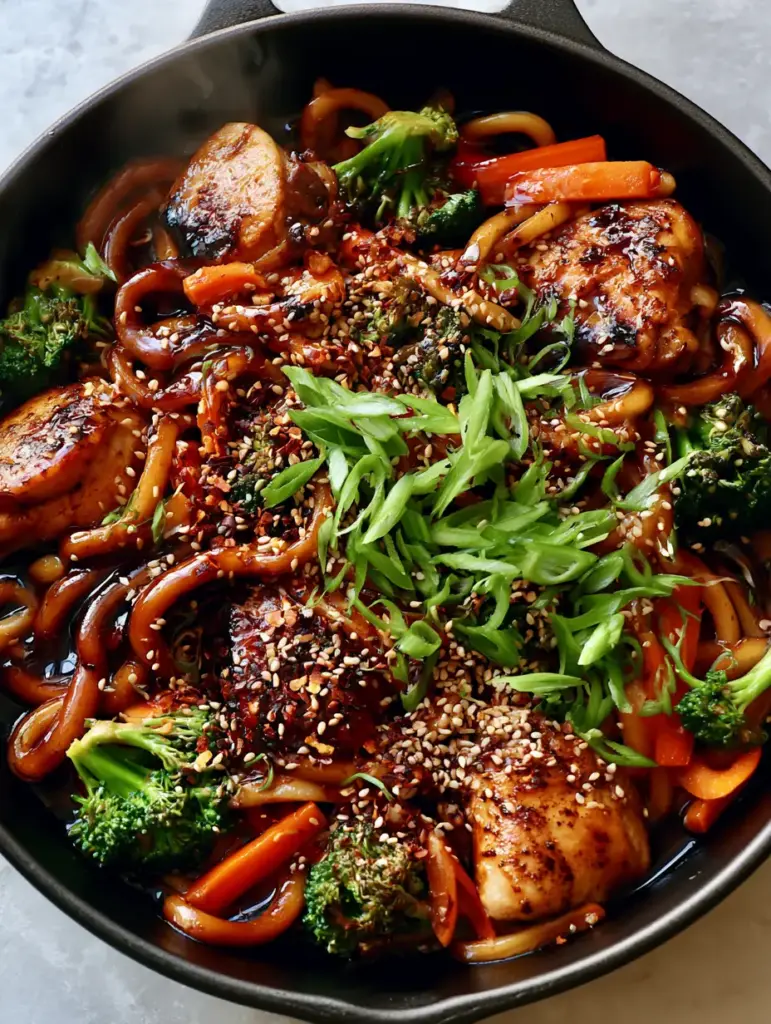
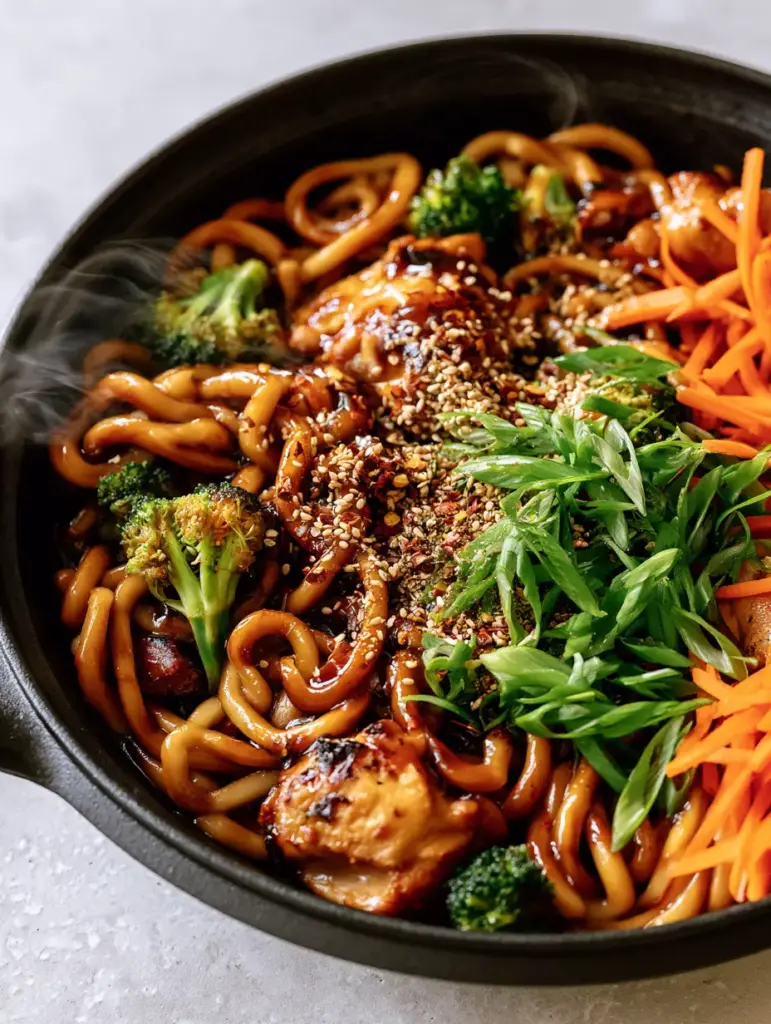
When it comes to weeknight comfort food, nothing rivals the satisfying slurp of Chicken Teriyaki Noodles. Imagine thick, bouncy wheat noodles perfectly coated in a mahogany-colored, translucent glaze that shimmers under the kitchen lights. Every bite offers a contrast of textures, from the golden-seared chicken thighs with their distinct char marks to the snap of vibrant green broccoli and the sweetness of julienned carrots.
This isn’t just another stir-fry; it is a masterclass in balance. We are moving away from the thin, watery sauces found in takeout containers and moving toward a rich, viscous teriyaki that clings to every strand of noodle. By using a rustic matte black cast iron skillet, we achieve a level of “wok hei”—the breath of the wok—that provides those essential smoky notes and deep caramelization.
Whether you are looking for a quick meal to feed a hungry family or a gourmet-style dinner for two, these Chicken Teriyaki Noodles deliver professional results with minimal effort. The combination of toasted white sesame seeds, a kick of red chili flakes, and the freshness of sliced green onions creates a visual and flavorful masterpiece that looks as good as it tastes.
Why These Chicken Teriyaki Noodles Outshine the Competition
- Perfectly Charred Protein: By using boneless, skinless chicken thighs instead of breasts, we ensure the meat remains juicy while developing deep, dark char marks that provide a smoky depth of flavor.
- Glossy, Translucent Glaze: Our sauce isn’t just dark; it’s a rich mahogany that catches the light, achieved through a precise balance of soy sauce, mirin, and a controlled cornstarch slurry.
- Superior Noodle Texture: We utilize thick wheat noodles (udon-style) that provide a “bouncy” mouthfeel, capable of standing up to the heavy glaze without becoming mushy.
- Vibrant Color Palette: The sharp contrast between the bright green blanched broccoli, the vibrant orange julienned carrots, and the dark noodles makes this dish a feast for the eyes as well as the palate.
The Ultimate Flavor Components for Chicken Teriyaki Noodles
To achieve the result seen in professional food photography, every ingredient serves a dual purpose: flavor and visual structure. You cannot skip the aromatics if you want a sauce that truly sings.
1 lb (454g) Boneless Skinless Chicken Thighs: Thighs are the secret to that “golden-seared” look. They contain enough fat to withstand high-heat searing without drying out, allowing those beautiful char marks to form.
12 oz (340g) Thick Wheat Noodles: Look for fresh or vacuum-sealed udon noodles. Their thickness allows the translucent dark brown teriyaki glaze to coat a larger surface area, ensuring every bite is flavor-packed.
2 cups (150g) Broccoli Florets: We want these to be “bright green.” To achieve this, we will blanch them briefly before adding them to the skillet, preserving their crunch and chlorophyll.
1 large (60g) Carrot, julienned: Precision cutting is key here. Long, thin strips of orange carrot provide a “vibrant julienned” appearance that weaves through the noodles beautifully.
1/2 cup (120ml) Low-Sodium Soy Sauce: This provides the salty, savory base for our mahogany glaze. Using low-sodium allows us to control the seasoning without over-salting the dish.
1/4 cup (60ml) Mirin: This Japanese rice wine adds a mild sweetness and a distinctive luster to the sauce, contributing to that “glossy” finish described in our visual blueprint.
2 tbsp (30g) Brown Sugar: The molasses in brown sugar helps deepen the color of the glaze to a rich, dark brown and aids in the caramelization of the chicken.
1 tbsp (15g) Fresh Ginger, grated: Fresh ginger provides a sharp, spicy aromatic backnote that balances the richness of the soy and sugar.
3 cloves (15g) Garlic, minced: Garlic is an “invisible” essential, adding savory depth that permeates the entire dish as it hits the hot oil.
1 tbsp (8g) Cornstarch mixed with 2 tbsp (30ml) Water: This is the secret to the “translucent” glaze. It thickens the sauce into a coating consistency without making it opaque or cloudy.
2 tbsp (30ml) Neutral Oil: Use an oil with a high smoke point, like avocado or grapeseed oil, to achieve those “visible char marks” on the chicken without the oil breaking down.
Garnish Trio: 1 tsp (5g) toasted white sesame seeds, 1/2 tsp (2g) dried red chili flakes, and 2 stalks (20g) finely sliced green onions. These provide the final textural pop and color contrast.
Essential Equipment for a Professional Finish
Achieving a restaurant-quality stir-fry at home requires the right tools to manage heat distribution. The visual blueprint specifically highlights a rustic matte black cast iron skillet, and for good reason.
Cast iron retains heat better than almost any other material. This high thermal mass is what allows us to sear the chicken chunks quickly, creating that “golden-seared” exterior while keeping the inside tender. If you don’t have a cast iron skillet, a heavy-bottomed stainless steel pot or a carbon steel wok can serve as substitutes, though they may not produce the same rustic char.
You will also need a sharp chef’s knife for those julienned carrots and a microplane for the ginger and garlic. These small details ensure the aromatics melt into the sauce rather than leaving behind chunky bites.
Step-by-Step Instructions: Mastering the Sear and the Slurp
Prepping the Foundations
Start by bringing a large pot of salted water to a boil. Drop your broccoli florets into the water for exactly 60 seconds until they turn “bright green,” then immediately shock them in an ice bath. This “blanching” technique is the only way to ensure they don’t turn a muddy olive color in the skillet.
In the same boiling water (after removing the broccoli), cook your thick wheat noodles according to the package directions—usually 2-3 minutes for fresh udon. Drain them and toss with a teaspoon of oil to prevent sticking. They should be “bouncy” and slightly undercooked, as they will finish in the sauce.
Achieving the Perfect Golden-Seared Chicken
Pat your chicken thigh chunks bone-dry with paper towels. Season them with a pinch of salt. Heat your cast iron skillet over medium-high heat with 1 tbsp (15ml) of oil. Once the oil is shimmering and just beginning to wisps of steam appear, add the chicken in a single layer.
Do not move the chicken for at least 3 minutes. This patience is what creates those “visible char marks.” Flip the pieces once they release easily from the pan. Cook until the chicken is golden and fully cooked through, then remove it from the skillet and set aside.
The Secret Mahogany Glaze
In the same skillet, add the remaining oil if the pan is dry. Briefly sauté the julienned orange carrots for 2 minutes until they soften slightly but maintain their snap. Add the garlic and ginger, stirring constantly for 30 seconds until the aroma fills the room.
Whisk together the soy sauce, mirin, and brown sugar, then pour it into the skillet. Bring the liquid to a simmer. Once bubbling, whisk in your cornstarch slurry. Watch closely as the liquid transforms from a thin juice into a “glossy, mahogany-colored translucent glaze.”
The Grand Assembly
Add the bouncy noodles, charred chicken, and blanched broccoli back into the skillet. Use tongs to toss everything together over medium heat. The goal is for the noodles to be “heavily coated” in the sauce, catching the soft natural light as you move them.
Continue to toss for 2-3 minutes until the noodles have absorbed some of the sauce and everything is piping hot. You should see “tiny wisps of steam” rising from the skillet, signaling that the dish is ready for its final flourish.
Expert Tips for Success
- Dry the Protein: Moisture is the enemy of the sear. If your chicken is wet, it will steam rather than char. Always pat it dry before it hits the skillet.
- The Slurry Secret: Never add dry cornstarch directly to a hot pan. Always mix it with cold water first to create a slurry; this prevents lumps and ensures that “translucent” look.
- Don’t Overcrowd: If your skillet is small, sear the chicken in two batches. Overcrowding drops the temperature of the cast iron, resulting in gray meat instead of “golden-seared” chunks.
- Noodle Choice: While this recipe calls for thick wheat noodles, you can experiment with others. If you’re a fan of soupier textures, check out our spicy chicken ramen soup for a different take on Asian-inspired comfort.
The Best Pairings for Chicken Teriyaki Noodles
This dish is a complete meal on its own, but it pairs beautifully with light, acidic sides that cut through the richness of the teriyaki glaze. A simple cucumber salad or a side of fresh pico de gallo might seem unconventional, but the acidity provides a perfect counterpoint to the sweet and savory noodles.
For those who love a variety of fast weeknight meals, you might also enjoy exploring other poultry-based classics like our boldly marinated chicken dishes. If you are in the mood for something creamier, our chicken alfredo with garlic bread offers a different style of comfort entirely.
Storage, Reheating, and Freezing
These noodles make for an incredible lunch the next day. Store any leftovers in an airtight container in the refrigerator for up to 4 days. The sauce will thicken further as it cools, so the noodles will become even more flavorful.
When reheating, add a splash of water or chicken broth to the pan or microwave bowl. This loosens the “dark mahogany glaze” and restores that “glossy” appearance. While you can freeze this dish, the broccoli may lose its snap upon thawing, so it is best enjoyed fresh or from the fridge.
Frequently Asked Questions
Yes, but chicken thighs are preferred for their higher fat content, which prevents them from drying out during the high-heat searing process required for this dish.
Use a cast iron skillet and ensure the chicken thighs are patted completely dry. Let them cook undisturbed for 3-4 minutes on medium-high heat to develop a deep sear.
Blanch the broccoli florets in boiling water for one minute and immediately shock them in ice water. This sets the color before you toss them with the noodles.
Thick wheat noodles, specifically fresh or vacuum-sealed udon, are best because their bouncy texture holds up well to the heavy, glossy teriyaki glaze.
Cloudy sauce usually happens if the cornstarch isn’t fully dissolved in a cold liquid slurry before adding it to the pan, or if it hasn’t reached a full simmer to ‘clear’ the starch.
The Perfect Chicken Teriyaki Noodles Recipe
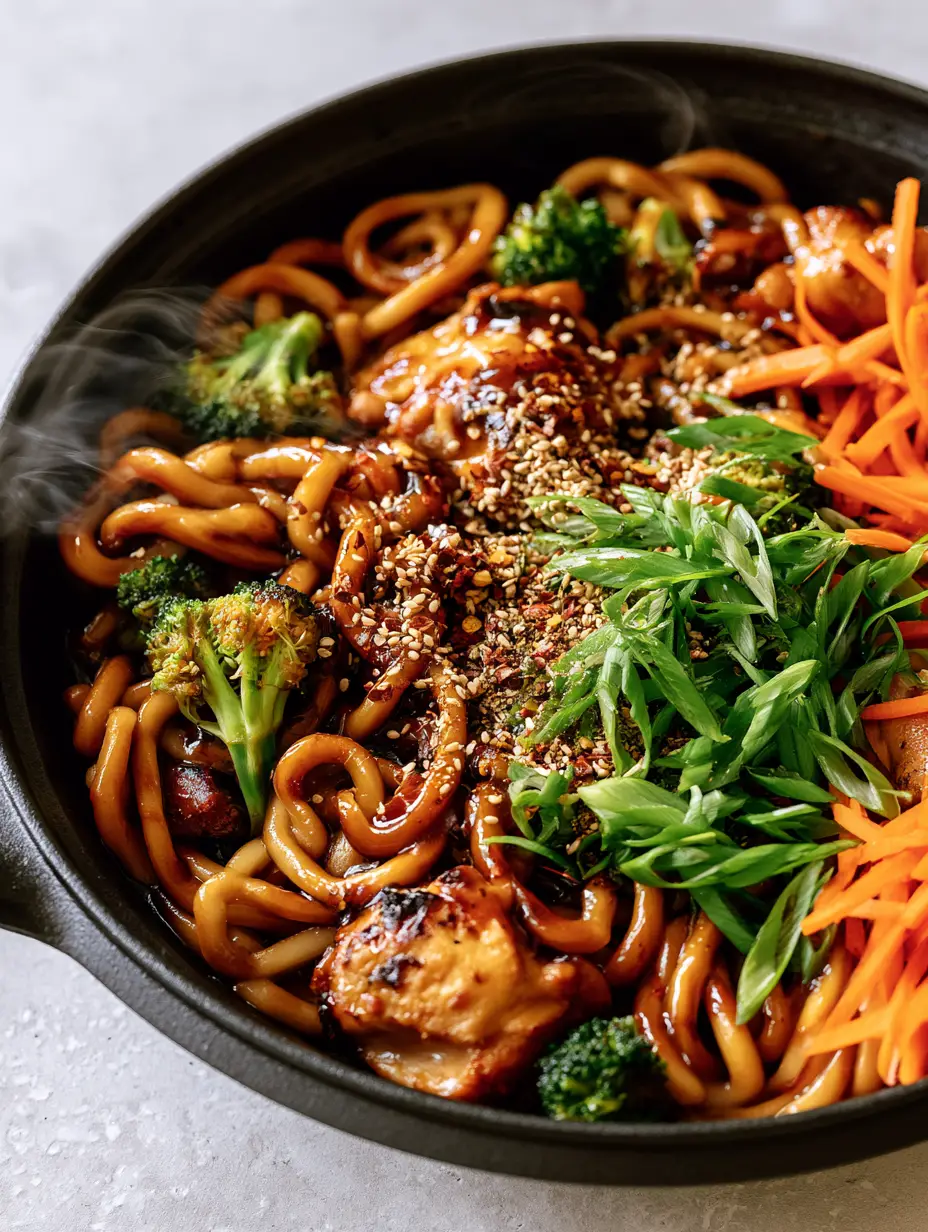
Chicken Teriyaki Noodles: The Ultimate 20-Minute Stir Fry Recipe
Ingredients
Equipment
Method
- Blanch broccoli florets in boiling water for 60 seconds until bright green, then shock in an ice bath. Cook thick wheat noodles in the same water until bouncy, drain, and set aside.
- In a hot cast iron skillet, sear chicken thighs in oil until deep golden-brown char marks appear. Remove and set aside.
- Sauté carrots, ginger, and garlic. Add soy sauce, mirin, and brown sugar. Whisk in cornstarch slurry until a glossy, translucent mahogany glaze forms.
- Return chicken, noodles, and broccoli to the skillet. Toss until heavily coated and steaming. Garnish with sesame seeds, chili flakes, and green onions.
Notes
Always blanch broccoli separately to keep the color vibrant green.
Closing and Call to Action
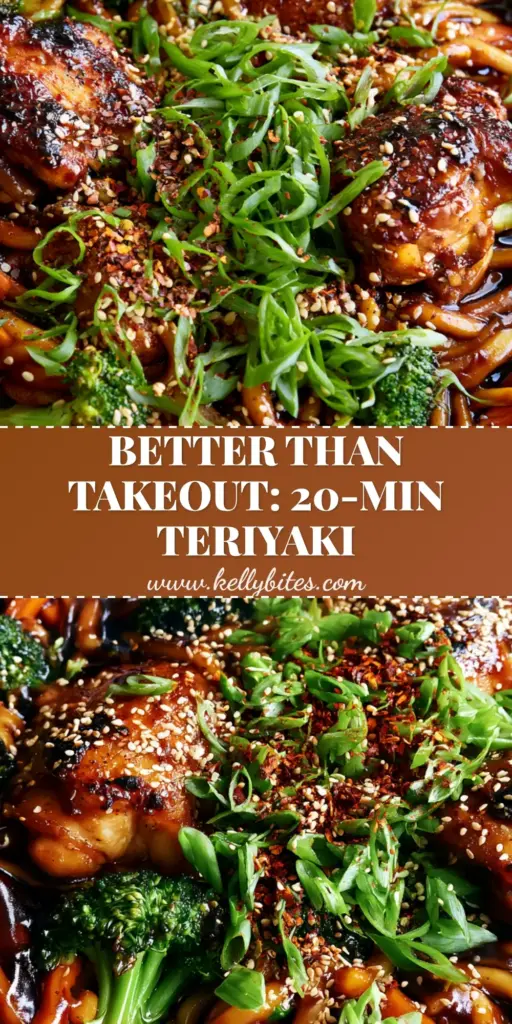
Mastering Chicken Teriyaki Noodles at home is a culinary milestone that will transform your weeknight routine. The combination of high-heat searing, a perfectly balanced mahogany glaze, and the crunch of fresh vegetables creates a dish that is far superior to anything you can order at a restaurant. It’s fast, it’s fresh, and it’s visually stunning.
Did you achieve those perfect char marks on your chicken? We would love to hear about your results! Leave a comment below and let us know how your stir-fry turned out. If you enjoyed this recipe, please share it with your friends and follow us on Pinterest for more daily recipe inspiration!