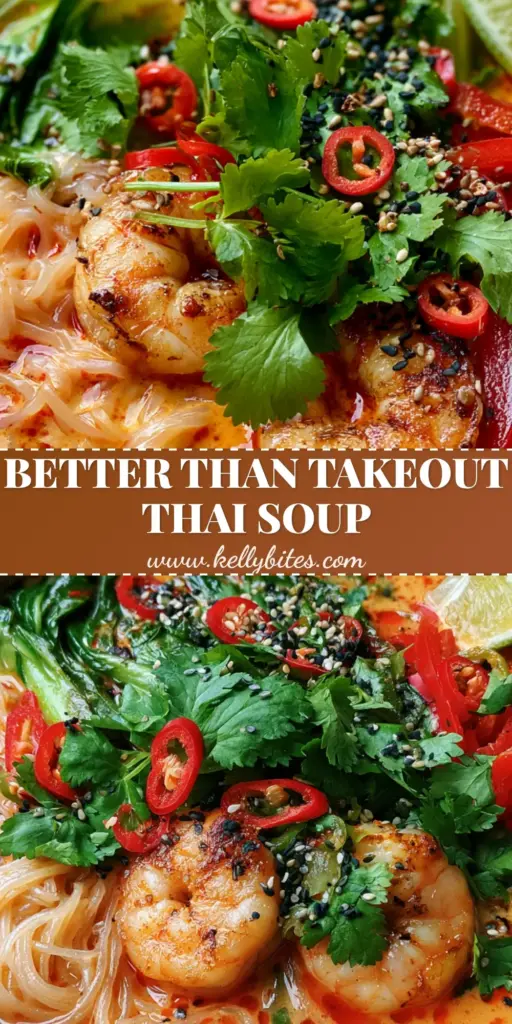
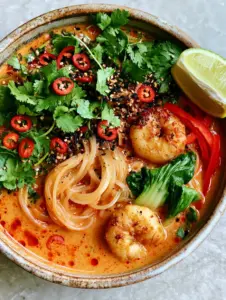
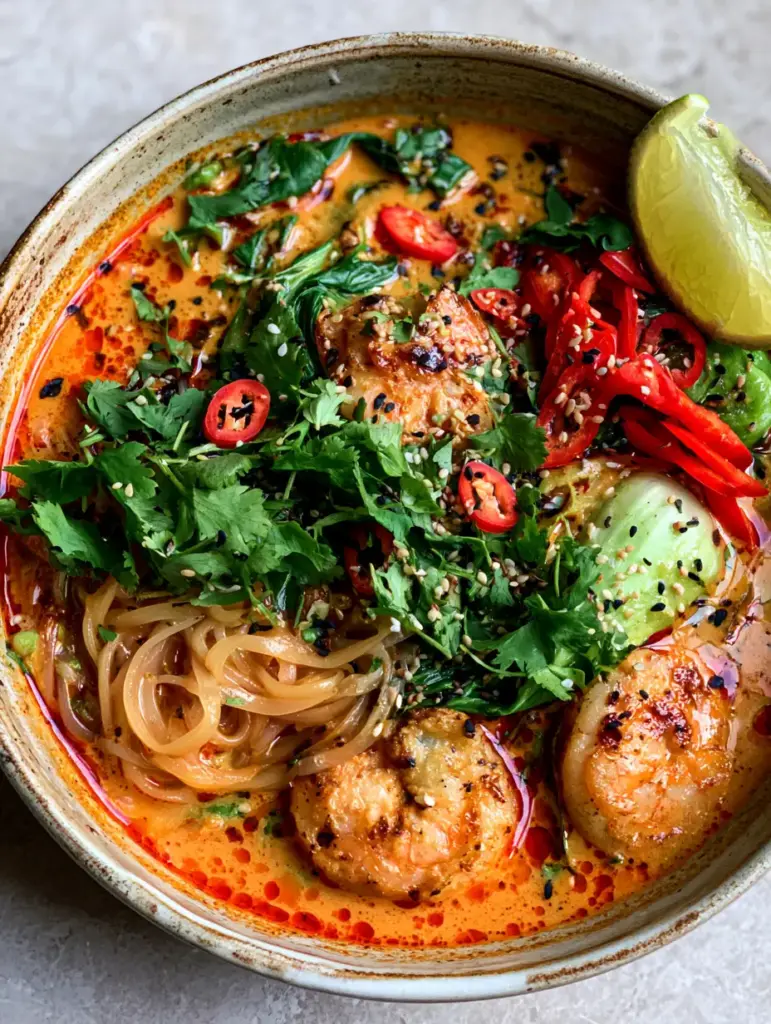
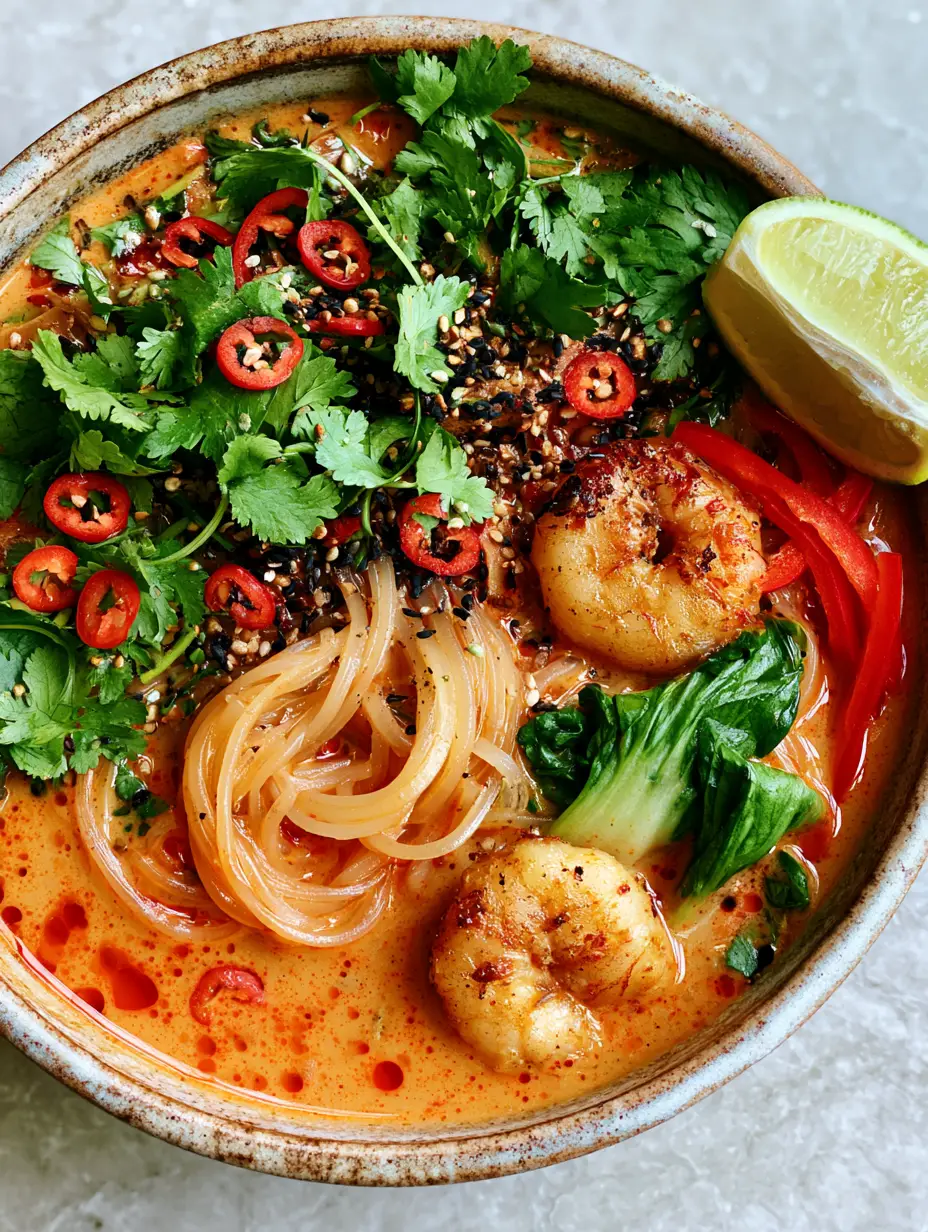
There is nothing quite like the visual allure of a steaming, rustic ceramic bowl filled with Thai red curry noodle soup. As the aromatic steam rises, carrying notes of lemongrass and galangal, you are greeted by a rich, creamy orange-red coconut broth that glistens with visible droplets of red chili oil on the surface. This isn’t just a meal; it’s a sensory experience that rivals the best street food in Bangkok.
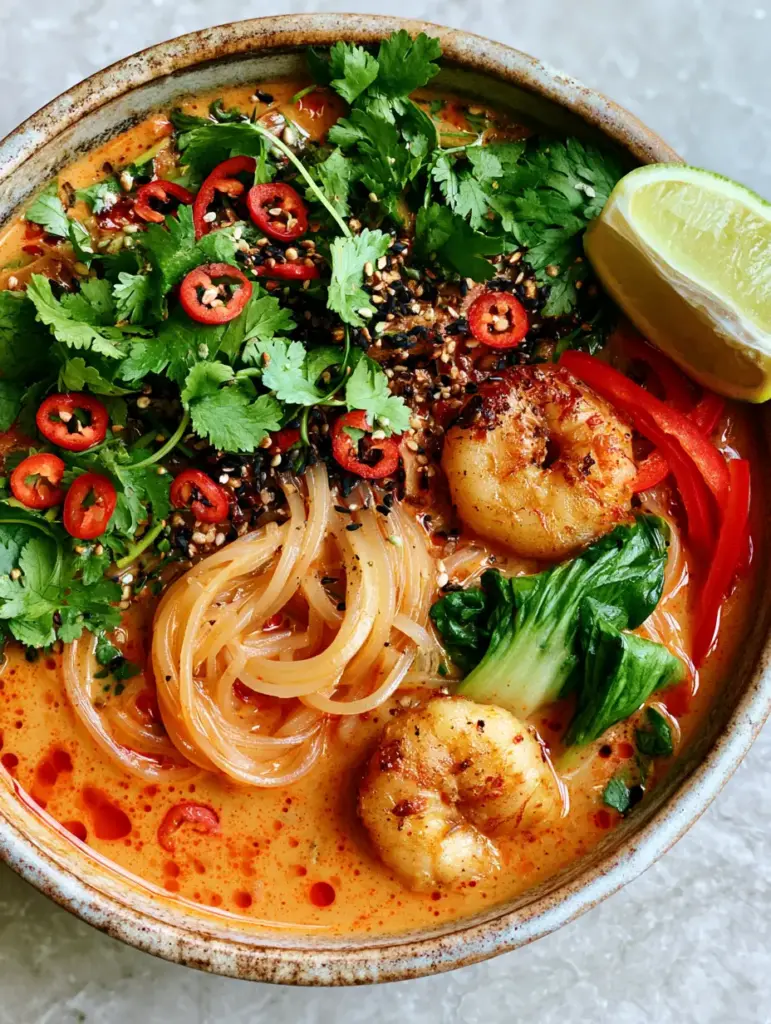
The beauty of this dish lies in its contrasting textures. Imagine glossy, translucent rice noodles tangled and partially submerged in a velvety liquid, paired with succulent shrimp that carry distinct char marks from a high-heat sear. Vibrant green bok choy and crisp, thinly sliced red bell peppers provide a fresh crunch that cuts through the decadence of the coconut milk. Topped with a heavy garnish of bright green cilantro, thin rounds of fiery bird’s eye chili, and a duo of toasted black and white sesame seeds, every spoonful is a masterpiece.
Whether you are looking for a comforting weeknight dinner or an impressive dish for guests, this Thai red curry noodle soup delivers on every front. The soft, side-lit natural daylight hitting the gentle sheen of the broth makes it as photogenic as it is delicious. Let’s dive into the culinary science of building these complex flavors from scratch.
Why This Red Curry Noodle Soup Works Every Time
- The Flavor Trifecta: We achieve a perfect balance of spicy (red curry paste), creamy (full-fat coconut milk), and umami (fish sauce) to create a professional-grade base.
- Maillard-Seared Shrimp: Instead of boiling the shrimp in the broth, we sear them separately to achieve deep char marks and a snap-like texture that contrasts with the soft noodles.
- Textural Harmony: The use of translucent rice noodles provides a “slurpable” quality that captures the droplets of chili oil, ensuring every bite is infused with heat.
- Vibrant Visuals: Using raw red bell peppers and lightly steamed bok choy maintains the “vibrant green” and “crisp red” colors described in our culinary blueprint.
Pantry Staples for a Rich Coconut Curry Base
To recreate this Thai red curry noodle soup, you need ingredients that provide both depth and structural integrity to the broth. Using high-quality fats and aromatics is essential for that signature chili oil sheen.
Thai Red Curry Paste: 3 tbsp (45g). Look for a brand like Maesri or Mae Ploy for an authentic punch of heat and concentrated aromatics like lemongrass and shrimp paste.
Full-Fat Coconut Milk: 2 cans (800ml). It is vital to use full-fat milk rather than “lite” versions to ensure the broth is creamy enough to support the rice noodles without becoming watery.
Large Shrimp (Prawns): 1 lb (454g). Ensure they are peeled and deveined but with tails on for a better visual presentation and a more succulent bite after searing.
Rice Stick Noodles: 8 oz (227g). These glossy translucent rice noodles are the heart of the dish; choose a medium width for the best “tangle” in the bowl.
Baby Bok Choy: 3 heads. These provide the vibrant green bok choy leaves that look stunning against the orange broth and offer a mild, earthy sweetness.
Red Bell Pepper: 1 large (150g). Slicing these into thin, raw strips ensures they stay crisp and provide a pop of color that matches the red chilies.
Chicken or Vegetable Stock: 2 cups (480ml). This thins the coconut milk just enough to create a drinkable soup while adding a foundational layer of savory flavor.
Fish Sauce: 2 tbsp (30ml). The essential “salty” element of Thai cuisine, providing an umami depth that salt alone cannot replicate.
Coconut Oil: 1 tbsp (15ml). Used for searing the shrimp and blooming the curry paste; it withstands high heat while complementing the coconut theme.
Fresh Lime Juice: 2 tbsp (30ml) plus wedges for serving. The acidity is crucial to brighten the heavy fats in the coconut milk and balance the spice. You should always have a lime wedge resting on the rim of your bowl for that final squeeze.
Aromatics and Garnishes: You will need 3 cloves of minced garlic, 1 tbsp (15g) of grated ginger, fresh cilantro sprigs, sliced red bird’s eye chilies, and a mix of toasted black and white sesame seeds.
Essential Tools for the Perfect Sear and Simmer
Achieving the right texture requires a few specific kitchen tools. To get those beautiful char marks on your shrimp, a heavy-bottomed skillet is your best friend.
I highly recommend using a stainless steel pot or a Dutch oven for the broth. These vessels hold heat evenly, which is critical when you are blooming the curry paste to release its oils.
A spider strainer or tongs are also helpful for handling the rice noodles and bok choy delicate. Unlike a walking taco casserole which is built in a baking dish, this soup requires precision in your stovetop layers.
The Secret to Perfectly Charred Shrimp and Silky Broth
Step 1: Preparing the Glossy Translucent Rice Noodles
Place your rice noodles in a large heat-proof bowl and cover them with boiling water. Let them soak for 8-10 minutes until they are tender but still have a slight “bite” (al dente).
Drain the noodles and rinse them under cold water immediately. This removes excess starch, ensuring they remain glossy and don’t stick together while you prepare the Thai red curry noodle soup base.
Step 2: Searing the Shrimp for Maximum Visual Appeal
Pat the shrimp completely dry with paper towels—this is the only way to get those “light char marks” mentioned in the visual prompt. Season them lightly with salt.
Heat 1 tbsp (15ml) of coconut oil in a skillet over high heat until it just begins to smoke. Place the shrimp in a single layer and sear for 90 seconds per side. Look for a deep golden-pink hue and visible charring; then, set them aside.
Step 3: Blooming the Curry Paste and Building the Broth
In your heavy pot, add another splash of oil and the red curry paste. Stir-fry the paste for 2 minutes over medium heat. You are looking for the oil to separate and turn a deep red—this “blooming” process is what creates the droplets of red chili oil on the final soup surface.
Stir in the garlic and ginger for 30 seconds until fragrant. Slowly pour in the coconut milk and stock, whisking to incorporate the paste. Bring the liquid to a gentle simmer, but do not let it boil vigorously, as this can cause the coconut milk to break.
Step 4: Incorporating the Vegetables and Finishing Touches
Add the fish sauce and a pinch of sugar. Taste the broth; it should be a rich, creamy orange-red color. Drop the bok choy into the simmering broth for 2 minutes until the stems are tender but the leaves remain vibrant green.
Remove the pot from the heat and stir in the fresh lime juice. This preserves the bright acidity that can be lost if boiled for too long. If you’ve enjoyed making spicy chicken ramen soup, you’ll recognize this technique of finishing with fresh elements.
Step 5: Assembling the Masterpiece
Divide the glossy rice noodles between four rustic ceramic bowls. Ladle the hot broth and bok choy over the noodles, allowing them to tangle. Top each bowl with the seared shrimp.
Garnish heavily with the sliced raw red bell peppers, fresh cilantro sprigs, and thin rounds of red bird’s eye chili. Finish with a generous sprinkle of toasted black and white sesame seeds and a fresh lime wedge on the rim.
Expert Tips for Success
- Don’t Overcook the Noodles: Rice noodles continue to soften once they hit the hot broth. Under-soaking them slightly is better than over-soaking.
- Squeeze the Lime Last: The lime juice reacts with the coconut fat to create a more complex flavor profile, but only if added just before serving.
- The Pepper Secret: Keep the bell peppers raw! Their crisp texture is a necessary foil to the creamy broth, much like the fresh crunch found in pico de gallo.
- Control the Heat: Bird’s eye chilies are very spicy. If you prefer a milder Thai red curry noodle soup, remove the seeds or substitute with a milder Fresno chili.
Storage, Reheating, and Freezing
This soup is best enjoyed immediately while the noodles are at their peak “glossy” state. However, if you have leftovers, store the broth and noodles separately in airtight containers for up to 3 days in the refrigerator.
When reheating, do so gently on the stovetop. Adding a splash of water or extra coconut milk can help loosen the broth if it has thickened. We do not recommend freezing the soup with the noodles and shrimp inside, as the texture will degrade significantly.
What to Serve with Thai Red Curry Noodle Soup
This dish is a complete meal on its own, but it pairs beautifully with other vibrant starters. If you are hosting a themed dinner, consider starting with some quick recipes like spring rolls or a light cucumber salad.
During the colder months, this fits perfectly into a rotation of fall soups and stews. If you’re looking for something lighter for a warm evening, check out our collection of summer soup recipes for more inspiration.
Frequently Asked Questions
Yes, most traditional rice stick noodles are naturally gluten-free. Just ensure your red curry paste and fish sauce are also certified gluten-free if you have a sensitivity.
Absolutely. Thinly slice chicken breast or thighs and sear them similarly to the shrimp to maintain those golden-brown edges before adding them to the simmering broth.
You can increase the red curry paste to 4 tablespoons or leave the seeds in the bird’s eye chilies. For an extra kick, drizzle a little extra chili oil over the top before serving.
Reheat the broth on the stove over medium-low heat. Add the noodles at the very last second just to warm them through, as they will absorb more liquid and soften the longer they sit.
This usually happens if the broth is boiled too vigorously. Always keep the soup at a gentle simmer. However, seeing small red oil droplets on top is actually desirable and a sign of authentic Thai cooking!
The Ultimate Thai Red Curry Noodle Soup Recipe
Thai Red Curry Noodle Soup with Seared Shrimp and Coconut Broth
Ingredients
Equipment
Method
- Place rice noodles in a heat-proof bowl and cover with boiling water for 8-10 minutes until al dente.
- Pat shrimp dry and sear in coconut oil over high heat for 90 seconds per side until char marks appear.
- Fry red curry paste in a pot for 2 minutes until fragrant and oil droplets appear.
- Add coconut milk, stock, and fish sauce. Simmer gently. Add bok choy and cook for 2 minutes.
Notes
Ensure shrimp are completely dry before searing to get the best char marks.
Join the Kelly Bites Community!
I hope this Thai red curry noodle soup brings a bit of Thai sunshine to your kitchen. The combination of the creamy coconut and the charred shrimp is truly unforgettable. If you made this, please leave a comment below and let me know how it turned out!
Don’t forget to take a photo of your steaming bowl and tag me on social media. For more visual inspiration and recipe pins, follow me on Pinterest and save this recipe to your “Dinner Favorites” board!