When the late afternoon sun hits your kitchen counter, there is no dish that captures the essence of summer quite like this vibrant ratatouille soup. Inspired by the classic French stew, this version transforms rustic vegetables into a velvety, deep-orange masterpiece that is as visually stunning as it is delicious.
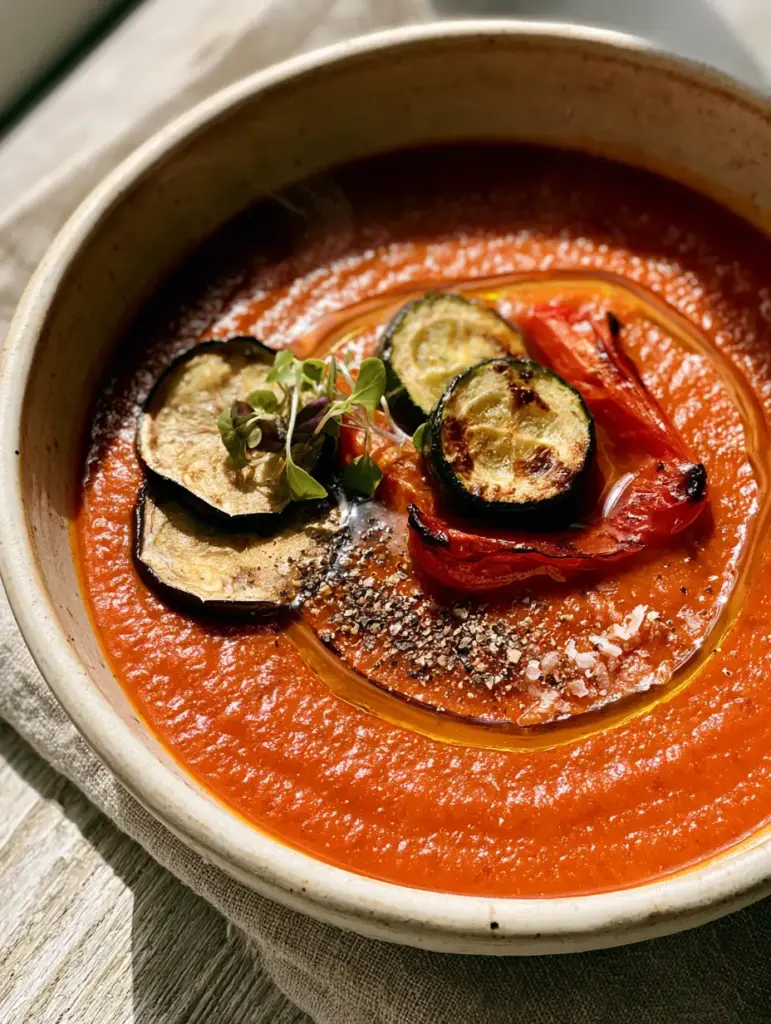
Imagine a heavy matte-cream stoneware bowl filled with a soup so thick and textured it feels like a warm hug from the Mediterranean. This isn’t just a blended vegetable broth; it is a concentrated explosion of roasted tomatoes, charred eggplant, and caramelized summer squash.
Every spoonful of this ratatouille soup offers a play on textures, from the smooth, pureed base to the artfully arranged garnishes of blistered red peppers and golden-brown zucchini. It is a recipe designed for those who appreciate the fine balance of scientific roasting techniques and artistic presentation.
Why You Will Crave This Velvety Roasted Vegetable Masterpiece
- Concentrated Umami Depth: By roasting the tomatoes and peppers until they blister, we unlock a natural sweetness and depth that raw simmering simply cannot achieve.
- Forensic Texture Profile: The base is a thick, velvety puree, providing a luxurious mouthfeel that contrasts perfectly with the firm, charred vegetable discs on top.
- Visual Culinary Art: With charred eggplant edges and glistening spirals of extra virgin olive oil, this dish looks like professional smartphone food photography come to life.
- Nutrient-Dense Science: This recipe maximizes the bioavailability of lycopene from roasted tomatoes while keeping the dish entirely plant-based and gluten-free.
The Elements of Flavor: Essential Ingredients for Your Provencal Base
To achieve the specific deep-orange hue and rich consistency described in our visual blueprint, each ingredient serves a specific structural and chemical purpose. We focus on high-quality produce and foundational fats to carry the aromatic compounds of the herbs.
Roma or San Marzano Tomatoes: 3 lbs (1.36kg). These varieties have a higher flesh-to-seed ratio, which is essential for creating a thick, textured puree without excess wateriness.
Red Bell Peppers: 2 large (approx. 400g). Roasting these until the skins blister adds a smoky sweetness that defines the “roasted” character of the soup base.
Japanese Eggplant: 1 medium (approx. 250g). We use thin discs specifically for the garnish to achieve those iconic charred edges without the bitterness of larger globe varieties.
Zucchini: 1 medium (approx. 200g). Caramelized rounds provide a soft, buttery texture and a golden-brown sear that contrasts beautifully against the red soup.
Fresh Basil & Micro-Basil: 1 bunch (approx. 30g). While large leaves are infused into the base, the micro-basil provides the delicate, peppery finish seen in high-end food photography.
Extra Virgin Olive Oil: 1/2 cup (120ml). This is used both for the roasting process and as a final “glistening spiral” to emulsify the flavors upon serving.
Yellow Onion and Garlic: 1 onion and 4 cloves. These foundational aromatics provide the savory backbone that prevents the roasted vegetables from being overly sweet.
Vegetable Stock: 2 cups (480ml). Use a high-quality, low-sodium stock to adjust the final consistency while maintaining a “thick and vibrant” texture.
Professional Tools for a Flawless Puree
To achieve the “velvety” texture mentioned in our visual prompt, you need tools that can handle high-heat roasting and precision blending. Using a stainless steel pot for the final simmer ensures even heat distribution and prevents the acidic tomatoes from reacting with the metal.
You will also need a high-speed immersion blender or a traditional stand blender to emulsify the roasted vegetables into a smooth, thick consistency. For the garnishes, a heavy cast-iron skillet is recommended to get those specific “golden-brown sear marks” on the zucchini and eggplant.
The Step-by-Step Blueprint for the Perfect Ratatouille Soup
Phase 1: The High-Heat Roasting Foundation
Preheat your oven to 425°F (220°C). Halve the tomatoes and remove the seeds from the red bell peppers, cutting them into wide strips.
Toss the tomatoes, red pepper strips, onion wedges, and garlic cloves with 3 tbsp (45ml) of olive oil and a generous pinch of sea salt. Arrange them on a large baking sheet, skin-side up.
Roast for 35-40 minutes. Look for the visual cue of blackened, blistered skins on the peppers and collapsed, caramelized edges on the tomatoes. This is where the “deep-orange” color is born.
Phase 2: Achieving the Velvety Puree
Once roasted, allow the vegetables to cool slightly. If you prefer a smoother texture, peel the charred skins off the peppers, though leaving some adds to the “textured and velvety” rustic feel.
Transfer the roasted vegetables and all the accumulated juices into your pot. Add the vegetable stock and a handful of fresh basil leaves. Use an immersion blender to process the mixture until it reaches a thick, uniform consistency.
Simmer the soup on low heat for 10 minutes to allow the flavors to marry. Taste and adjust with sea salt and cracked black pepper to enhance the natural acidity of the tomatoes.
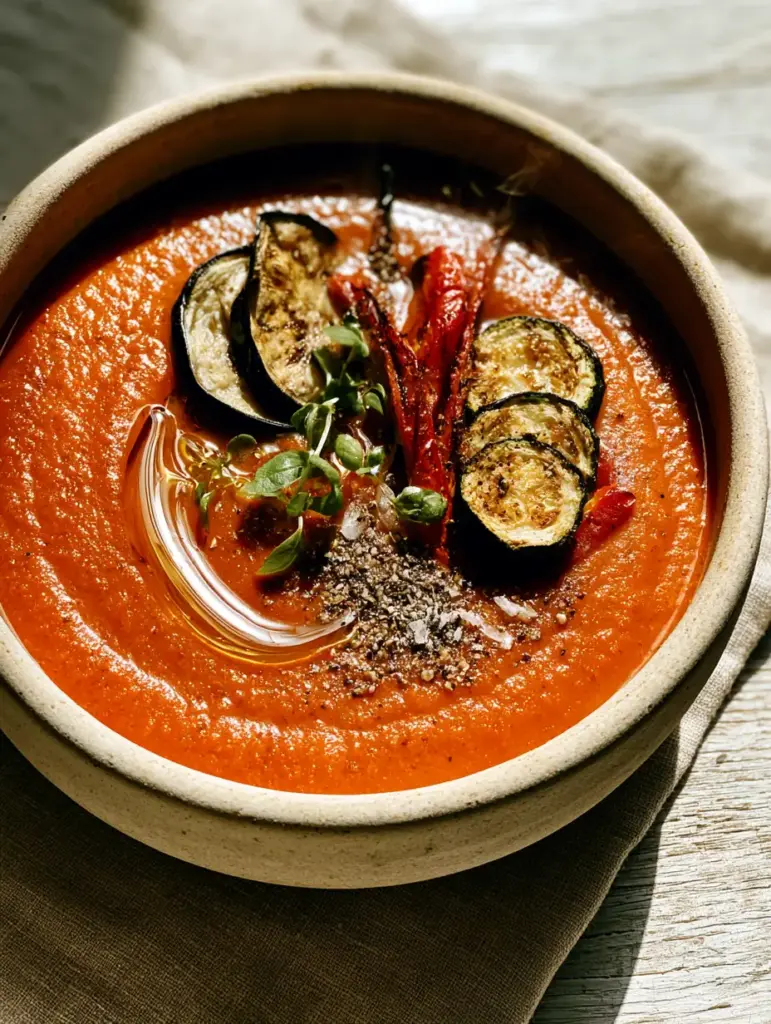
Phase 3: Crafting the Signature Garnishes
While the soup simmers, prepare the visual highlights. Slice the eggplant into thin discs and the zucchini into small rounds. Pat them dry with a paper towel to ensure a proper sear.
Heat 2 tbsp (30ml) of olive oil in a skillet over medium-high heat. Place the eggplant discs in the pan and sear until you see charred edges and a soft center.
In the same pan, sear the zucchini rounds until they develop distinct golden-brown sear marks. Remove from heat and season immediately with a pinch of sea salt flakes.
Expert Tips for Culinary Success
- Control the Moisture: If your soup feels too thin, continue simmering uncovered. The goal is a “thick, vibrant” consistency that can support the weight of the garnishes.
- The Sear Secret: Do not crowd the pan when searing the eggplant and zucchini. Crowding creates steam, which prevents the “charred edges” we are looking for.
- Acid Balance: If the tomatoes are particularly acidic, a teaspoon of balsamic vinegar can round out the flavor profile and deepen the red color.
- Temperature Play: Serve this soup hot, but allow the garnishes to be added at the very last second to maintain their structural integrity and sear marks.
Storage, Reheating, and Make-Ahead Instructions
This ratatouille soup actually tastes better the next day as the polyphenols in the vegetables continue to meld. Store the pureed base in an airtight container in the refrigerator for up to 5 days.
For the best visual results, store the garnishes (eggplant and zucchini) separately from the soup to keep them from becoming soggy. When reheating, do so gently on the stovetop over medium-low heat.
This soup freezes beautifully for up to 3 months. Thaw overnight in the fridge and give it a quick pulse with the blender after reheating to restore that velvety, emulsified texture.
What to Serve With Roasted Ratatouille Soup
This soup is a star on its own, but it pairs beautifully with other Provencal or Mediterranean-inspired dishes. For a light lunch, consider serving it alongside a fresh pico de gallo topped avocado toast for a fusion twist.
If you are looking for a more substantial meal, this soup serves as a perfect starter for a summer pasta recipe or even a hearty stuffed peppers recipe. For those who love a bit of crunch, a side of crusty sourdough dipped into the “glistening spiral of olive oil” is unbeatable.
Looking for more seasonal inspiration? Check out our curated list of summer soup recipes to keep your kitchen cool and your palate excited all season long.
Frequently Asked Questions
For the specific velvety texture described, a blender is required. However, you can use a food mill for a more rustic, slightly coarser texture that still embodies the roasted flavor profile.
Use a high-smoke-point oil and a preheated skillet. Ensure the eggplant slices are dry before they hit the pan, and sear them over medium-high heat for 2-3 minutes per side without moving them.
Yes, this recipe is naturally vegan and gluten-free, as it relies on roasted vegetables for thickness rather than flour or cream.
There is no need to peel them before roasting. The high heat will blister the skins, and the immersion blender will incorporate them into the ‘textured and velvety’ base, adding extra fiber and color.
To maintain the ‘golden-brown sear marks,’ reheat the eggplant and zucchini rounds in a dry pan or an air fryer for 2 minutes rather than microwaving them with the soup.
The Final Ratatouille Soup Recipe
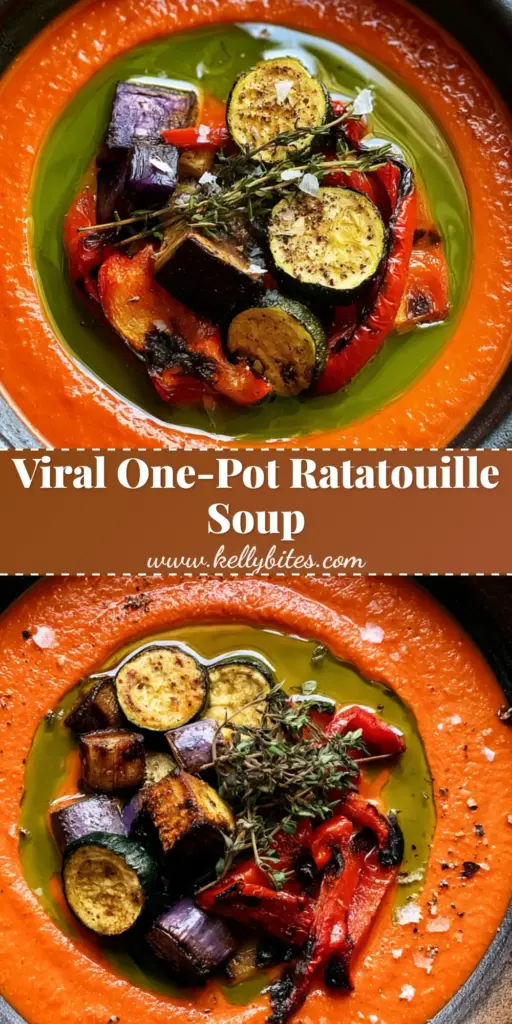
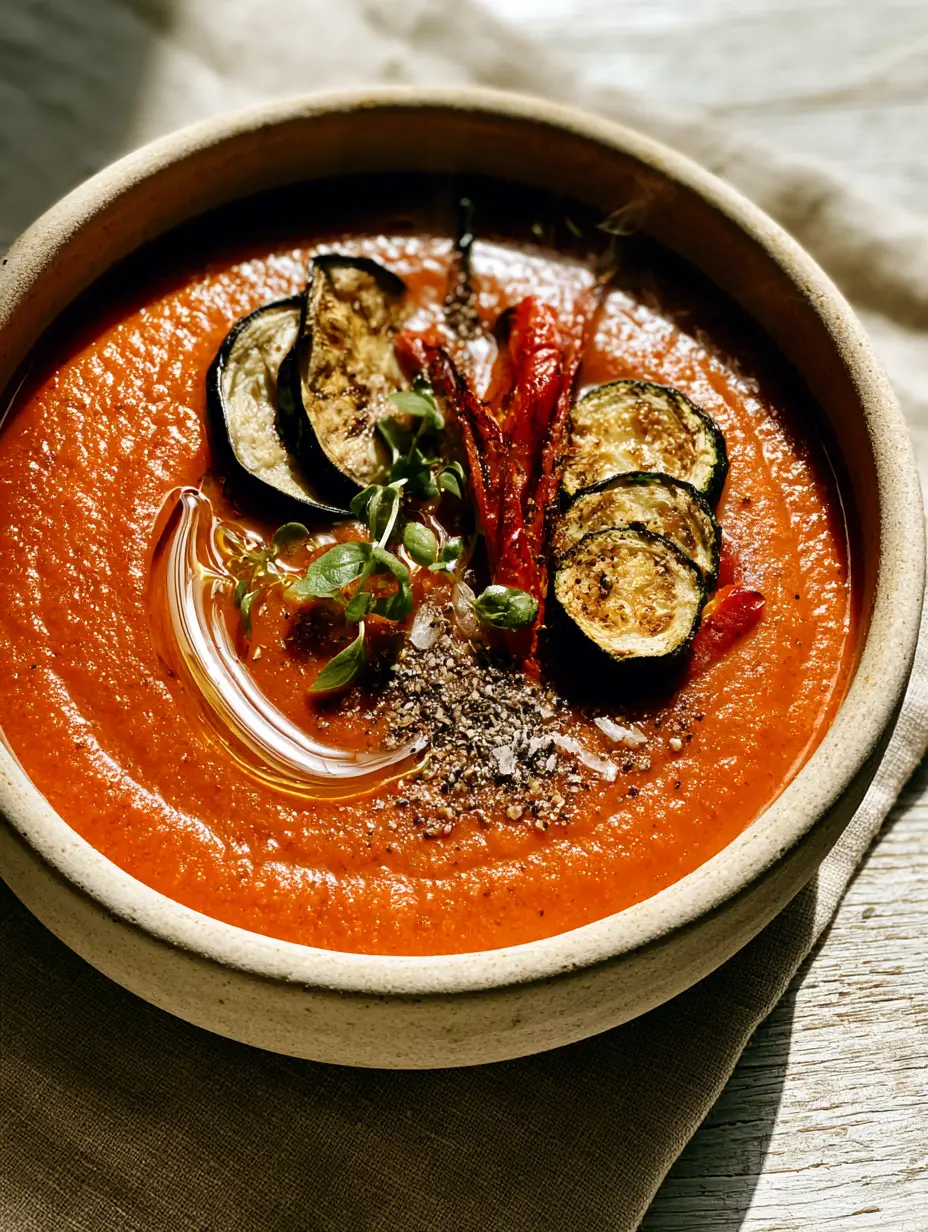
Ratatouille Soup: The Ultimate Roasted Vegetable Provencal Blend
Ingredients
Equipment
Method
- Preheat oven to 425°F (220°C). Toss tomatoes, red pepper strips, onion, and garlic with 3 tbsp (45ml) olive oil on a baking sheet.
- Roast for 35-40 minutes until tomato edges are caramelized and pepper skins are blistered and charred.
- Transfer all roasted vegetables and juices to a pot. Add vegetable stock and basil leaves.
- Use an immersion blender to process until a thick, velvety, deep-orange puree forms. Simmer for 10 minutes.
- In a skillet with 2 tbsp (30ml) oil, sear eggplant discs until edges are charred and centers are soft.
- Sear zucchini rounds until they develop distinct golden-brown sear marks.
- Ladle soup into bowls. Top with 2 eggplant discs, 3 zucchini rounds, and roasted pepper strips. Finish with an oil drizzle, micro-basil, salt flakes, and pepper.
Notes
Always sear garnishes in a single layer to ensure proper charring.
Bring the Flavors of Provence to Your Table
Creating this ratatouille soup is an exercise in patience and appreciation for quality ingredients. From the steam rising off the rustic stoneware bowl to the crunch of sea salt flakes on a charred eggplant disc, it is a multi-sensory experience that elevates home cooking to an art form.
If you enjoyed this roasted vegetable journey, please leave a comment below and share your results! Don’t forget to follow us and save this recipe to your favorite boards on Pinterest so you can recreate this vibrant dish whenever the craving for summer flavors hits.