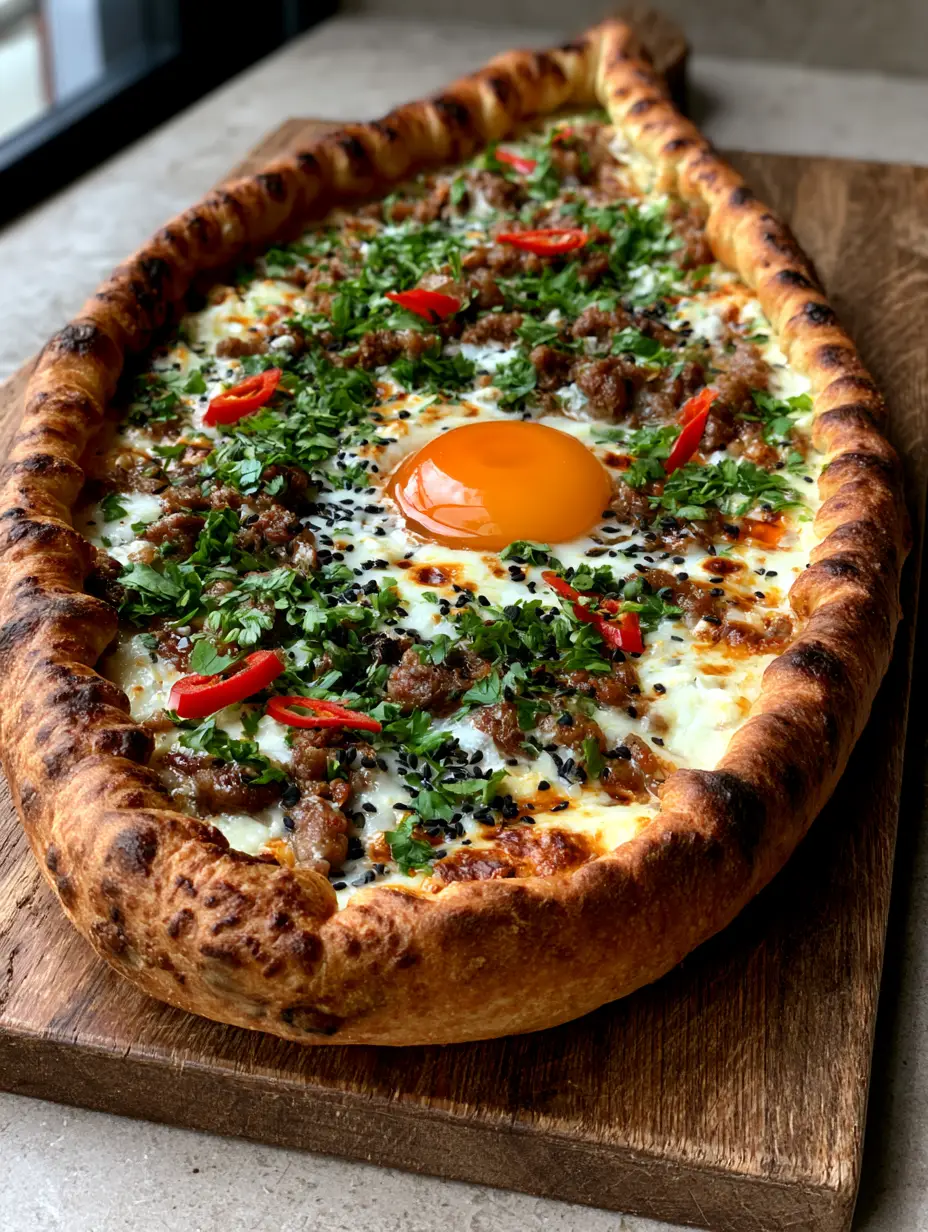
When you first lay eyes on an authentic Turkish Pide, you aren’t just looking at a flatbread; you are witnessing a masterclass in culinary architecture. This boat-shaped leavened dough serves as a vessel for molten cheese, spiced meats, and vibrant garnishes, creating a symphony of textures that range from the crunch of a charred crust to the silkiness of a runny egg yolk.
In this guide, we are diving deep into the forensics of the perfect Pide. We will explore how to achieve those professional leopard-spot charred ridges and that unmistakable olive oil sheen that makes the crust glisten under warm kitchen lights. Whether you are a seasoned baker or a curious home cook, this recipe brings the bustling stalls of Istanbul directly to your rustic wooden serving board.
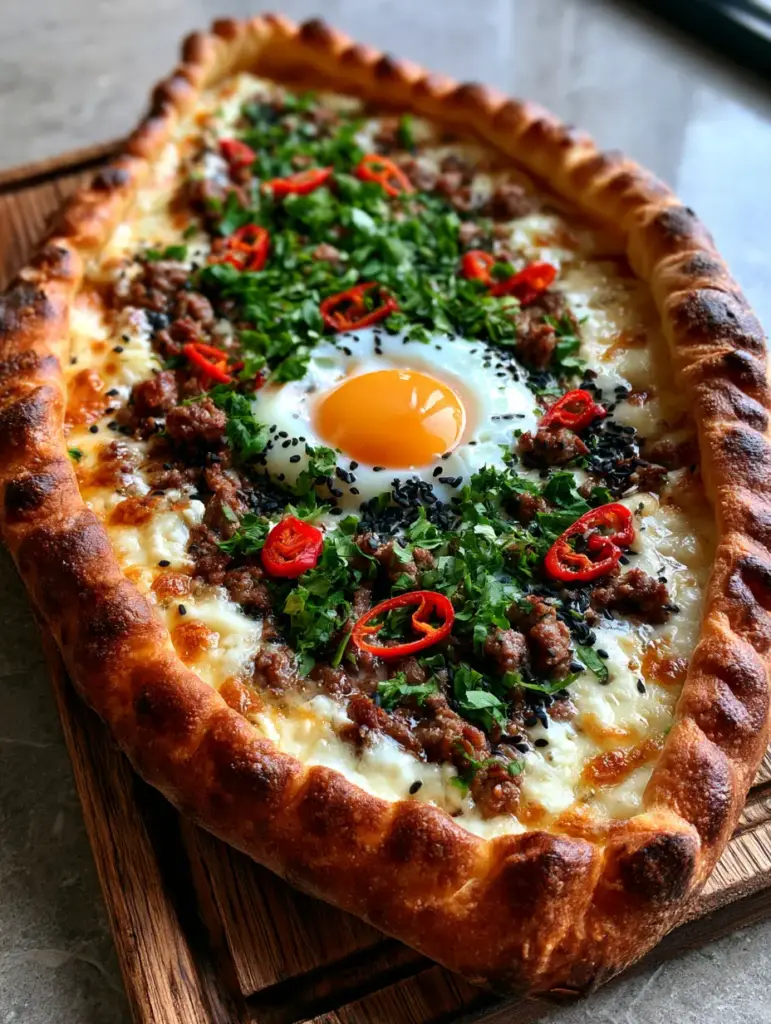
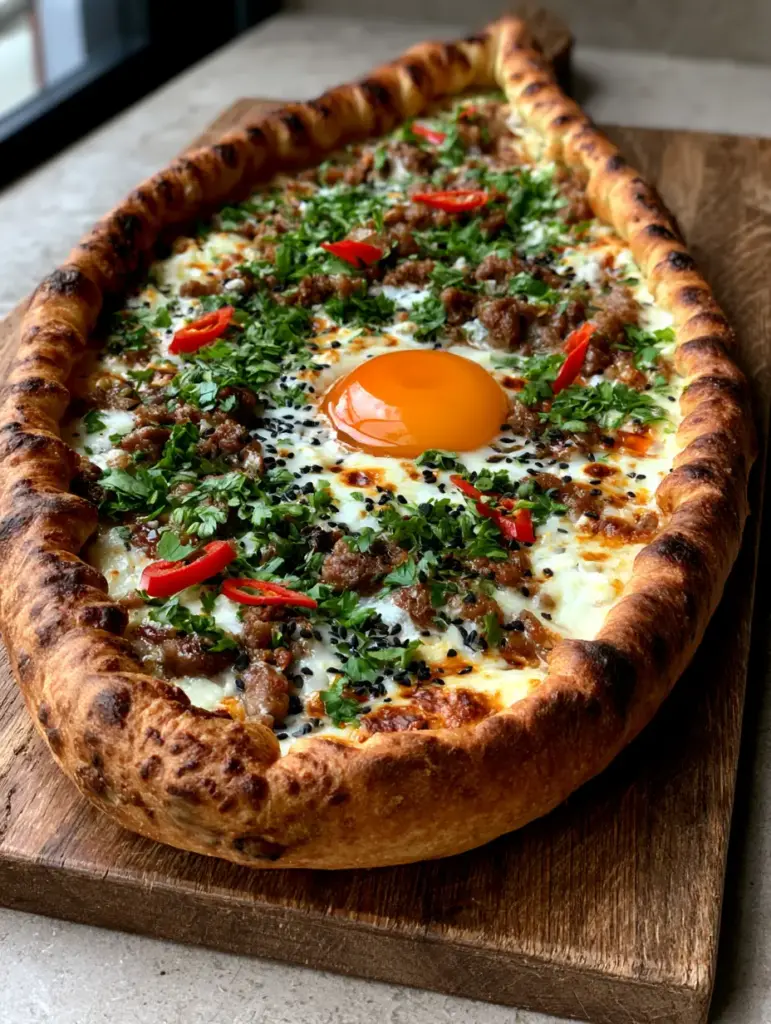
The visual appeal of this dish is undeniable, featuring deep golden-brown ridges and a center overflowing with bubbly mozzarella and tangy feta. Every bite offers a contrast between the savory, glistening minced lamb and the bright pop of fresh parsley and red Aleppo peppers. Let’s build this masterpiece from the flour up.
What Makes This Authentic Turkish Flatbread Irresistible?
- Textural Contrast: A thick, chewy dough foundation that transitions into high-ridged, crispy edges with professional-grade charring.
- The Molten Core: A dual-cheese blend of mozzarella for the “pull” and crumbled feta for a sharp, salty punch.
- Spiced Lamb Perfection: Finely minced lamb sautéed with aromatic spices until it develops a natural glisten from the rendered fats.
- The Liquid Gold: A perfectly centered, vibrant orange egg yolk that acts as a rich, creamy sauce for dipping the crust.
- Visual Garnish: A heavy scattering of green parsley, black Nigella seeds, and red pepper flakes that make the dish look as good as it tastes.
The Structural Components of a Perfect Pide
To achieve the results seen in our professional visual blueprint, we must select ingredients that perform specific scientific roles during the high-heat bake. We aren’t just making dough; we are engineering a vessel.
High-Protein Bread Flour: 3 ½ cups (435g). Bread flour provides the gluten structure needed to support the heavy lamb and cheese filling without collapsing or becoming soggy.
Active Dry Yeast: 2 ¼ tsp (7g). This leavening agent creates the airy, bubbly crumb within the thick ridges, allowing for those beautiful charred “leopard spots” to form in the oven.
Warm Water & Honey: 1 ¼ cups (300ml) water and 1 tsp (7g) honey. The honey doesn’t just feed the yeast; it assists in the Maillard reaction, ensuring a deep golden-brown crust color.
Extra Virgin Olive Oil: 3 tbsp (45ml). Used both in the dough for suppleness and as a final brush to create that signature high-gloss sheen on the crust ridges.
Minced Lamb: 1 lb (450g). We use lamb with a 20% fat content to ensure the meat remains moist and exhibits that visible glisten mentioned in our visual prompt.
The Cheese Duo: 1 ½ cups (170g) shredded mozzarella and ½ cup (75g) crumbled feta. The mozzarella provides the molten base, while the feta adds structural “chunks” that don’t fully melt away.
Aromatic Spices: 1 tsp (2g) Aleppo pepper flakes, 1 tsp (2g) ground cumin, and 1 tsp (2g) smoked paprika. These infuse the lamb with a deep, earthy warmth characteristic of Middle Eastern street food.
Fresh Toppings: 1 large egg yolk, 2 tbsp (8g) chopped fresh parsley, and 1 tsp (2g) black Nigella seeds. These provide the final color contrast and sensory “pop” required for a professional presentation.
Essential Tools for an Authentic Bake
To replicate the extreme close-up textures of a professional Pide, you need the right heat conductivity. While you could use a standard baking sheet, a preheated pizza stone or heavy baking steel is preferred for that bottom-up char.
You will also need a stainless steel pot or skillet to properly brown the lamb before it hits the dough. A pastry brush is non-negotiable for applying the olive oil sheen, and a sharp bench scraper helps in dividing the leavened dough into equal, manageable portions.
Step-By-Step: Engineering the Boat-Shaped Vessel
Phase 1: Developing the Leavened Dough
Combine your warm water, honey, and yeast in a large bowl. Let it sit for 5-10 minutes until a foamy head forms, indicating the yeast is active and ready to provide that airy rise.
Gradually incorporate the bread flour and salt, kneading by hand or stand mixer for about 8 minutes. You are looking for a smooth, elastic ball that springs back when poked; this elasticity is what allows us to shape the high ridges later.
Place the dough in a greased bowl, cover with a damp cloth, and let it rise in a warm spot for 60-90 minutes. It should double in size, becoming light and full of the gasses that will later create our charred bubbles.
Phase 2: Sautéing the Glistening Lamb Filling
While the dough rises, heat a skillet over medium-high heat. Add the minced lamb, breaking it apart into fine crumbles. Unlike a walking taco casserole, we want the lamb to be finely textured and highly seasoned.
Add finely diced onions and red peppers to the pan. Sauté until the peppers are soft and the lamb has rendered its fat, looking glossy and rich. Stir in the cumin, paprika, and Aleppo flakes during the last 2 minutes of cooking to toast the spices.
Phase 3: Shaping the Signature Boat Ridges
Divide your risen dough into 4 equal pieces. On a lightly floured surface, roll each piece into an elongated oval, roughly 12 inches (30cm) long. This shape is the foundation of the authentic Pide aesthetic.
Spread a generous layer of the mozzarella and feta blend down the center, leaving a 1-inch (2.5cm) border. Spoon the spiced lamb over the cheese. Now, fold the edges of the dough over the filling, pinching the ends tightly to create the “bow” and “stern” of the boat.
Phase 4: The High-Heat Bake and The Runny Yolk
Preheat your oven to 500°F (260°C). This intense heat is the secret to “leopard spotting.” Brush the exposed dough ridges with plenty of olive oil and sprinkle with Nigella seeds.
Slide the Pide onto your hot stone or tray. Bake for 10-12 minutes until the ridges are golden-brown and charred in spots. Quickly remove the tray, create a small well in the center of the lamb, and drop in a fresh egg yolk.
Return to the oven for exactly 60 seconds. This is just enough time to set the base of the yolk while keeping the center vibrant, orange, and glossy—just like the handheld smartphone photo style we are aiming for.
Expert Tips for Forensic Accuracy
- The Water Temperature: Ensure your water is between 105°F and 115°F (40-46°C). Too hot and you kill the yeast; too cold and the dough won’t rise enough to create those thick ridges.
- Don’t Drain the Fat: When cooking the lamb, keep a small amount of the rendered fat in the mix. This is what provides the “glisten” on the meat after it bakes.
- The Flour Shield: If your dough is sticking, use a light dusting of semolina flour on your parchment paper. It adds an extra layer of crunch to the bottom of the crust.
- Steam Control: If your red peppers are releasing too much moisture, sauté them thoroughly before adding to the Pide to prevent a “soggy hull” on your dough boat.
Storage and Reheating Guidelines
Pide is best enjoyed immediately while the egg is runny and the cheese is molten. However, if you have leftovers, wrap them tightly in foil and store in the refrigerator for up to 2 days.
To reheat, avoid the microwave as it will turn the crust rubbery. Instead, place the Pide in a 350°F (175°C) oven for 8-10 minutes. Note that the egg yolk will solidify during reheating, but the flavors will remain just as bold.
What to Serve with Your Turkish Pide
To balance the richness of the lamb and molten cheese, serve this with a bright, acidic side. A fresh pico de gallo offers a fusion twist, or stick to tradition with a cucumber-yogurt dip (Cacık).
If you are serving this as part of a larger Mediterranean feast, it pairs beautifully with light summer soup recipes or a crisp green salad. For those who love a bit more spice, an extra side of chicken fajitas-style grilled peppers can add bulk to the meal.
Frequently Asked Questions
Yes, you can use minced beef (80/20) instead of lamb. However, lamb provides the traditional authentic flavor and the specific ‘glisten’ from its unique fat content.
The secret is timing. Add the yolk during the final 60 seconds of baking. The residual heat from the lamb and cheese will set the bottom of the yolk while keeping the top glossy and liquid.
Nigella seeds (also called black onion seeds) have a slightly bitter, onion-like flavor. While optional, they provide the distinct visual contrast and authentic aroma found in traditional Turkish bakeries.
High-protein bread flour is best. It creates the necessary gluten network to hold the ‘boat’ shape and produces the chewy, bubbly texture required for leopard-spot charring.
Soggy dough is usually caused by too much moisture in the lamb or red pepper filling. Ensure you sauté the vegetables until their liquid has evaporated and use a preheated baking stone to crisp the bottom quickly.
The Authentic Turkish Pide Recipe Card
Pide: The Ultimate Turkish Boat Flatbread with Spiced Lamb and Runny Egg
Ingredients
Equipment
Method
- Combine warm water, honey, and yeast; let sit for 10 minutes until foamy.
- Mix in flour and salt, kneading for 8 minutes until elastic. Let rise for 90 minutes.
- Brown minced lamb with onions and red peppers until glistening. Season with Aleppo pepper and cumin.
- Roll dough into ovals, fill with cheese and lamb, and fold edges to form high-ridged boats.
- Bake at 500°F (260°C) for 10-12 minutes. Add egg yolk in the final minute.
Notes
Ensure the oven is fully preheated to 500°F for the best texture.
Mastering the Art of the Turkish Boat
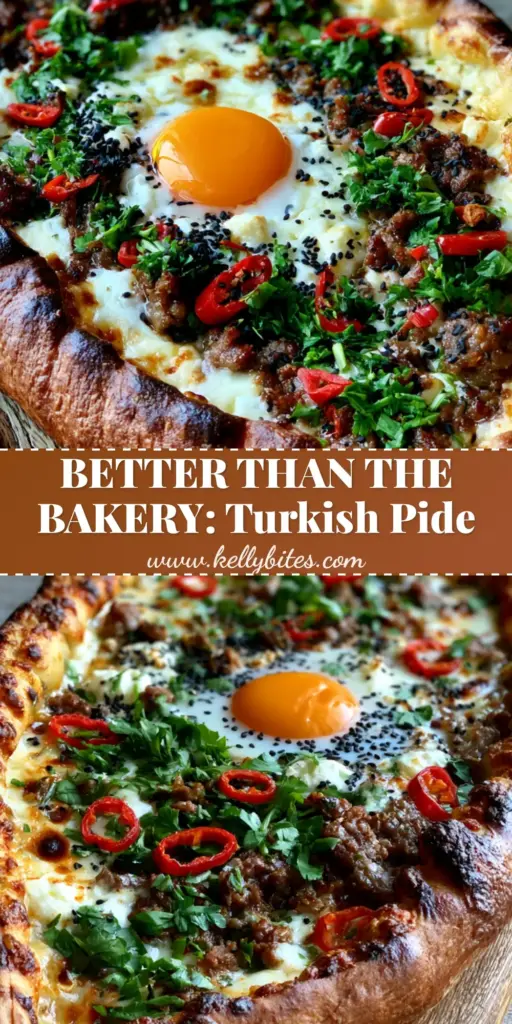
Creating an authentic Pide is a rewarding process that engages all the senses. From the smell of the toasted Nigella seeds to the sight of that glossy orange yolk breaking over spiced lamb, it is a dish designed to impress. The thick, charred crust provides the perfect handle for this portable feast, making it a favorite for both casual lunches and gourmet dinners.
We invite you to share your results! Did you get those perfect leopard spots on your crust? Head over to Pinterest to see more visual inspiration and save this recipe to your “International Favorites” board. Don’t forget to leave a comment below with your favorite Pide toppings!