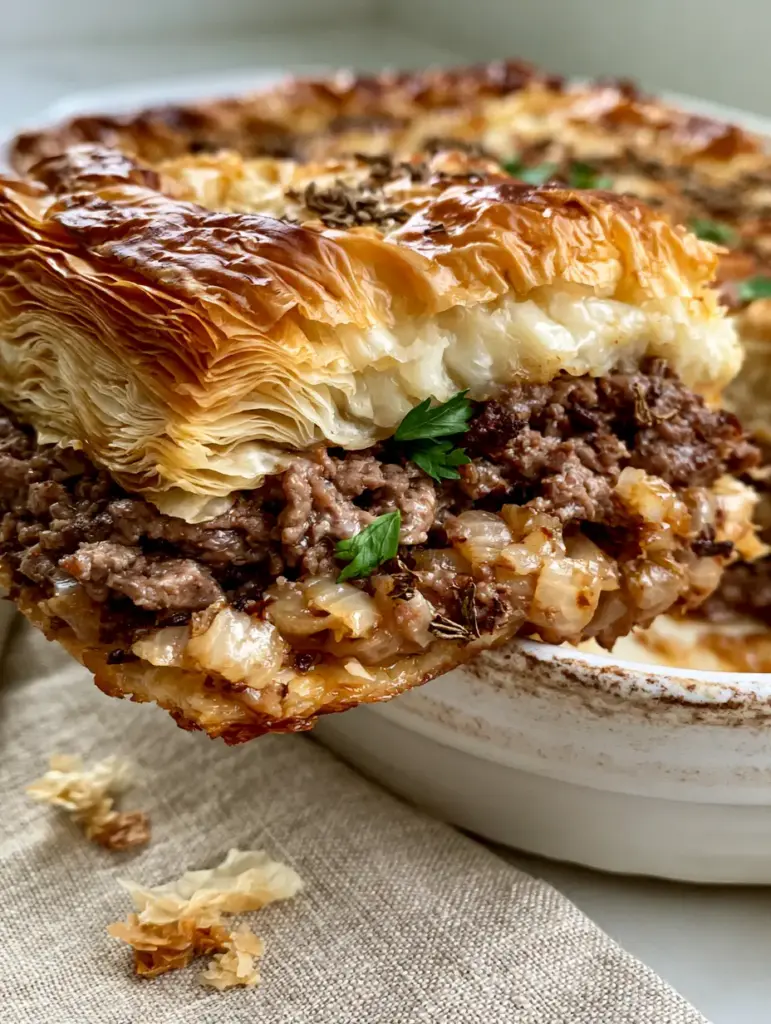
There is a specific, soul-warming magic that happens when golden-brown buttered phyllo meets a savory, herb-flecked beef filling. This Greek Meat Pie, traditionally known as Kreatopita, isn’t just a meal; it’s a masterclass in textural contrast. Imagine lifting a thick slice from a rustic ceramic dish and hearing that unmistakable crackle of dozens of paper-thin pastry layers shattering under the slightest pressure.
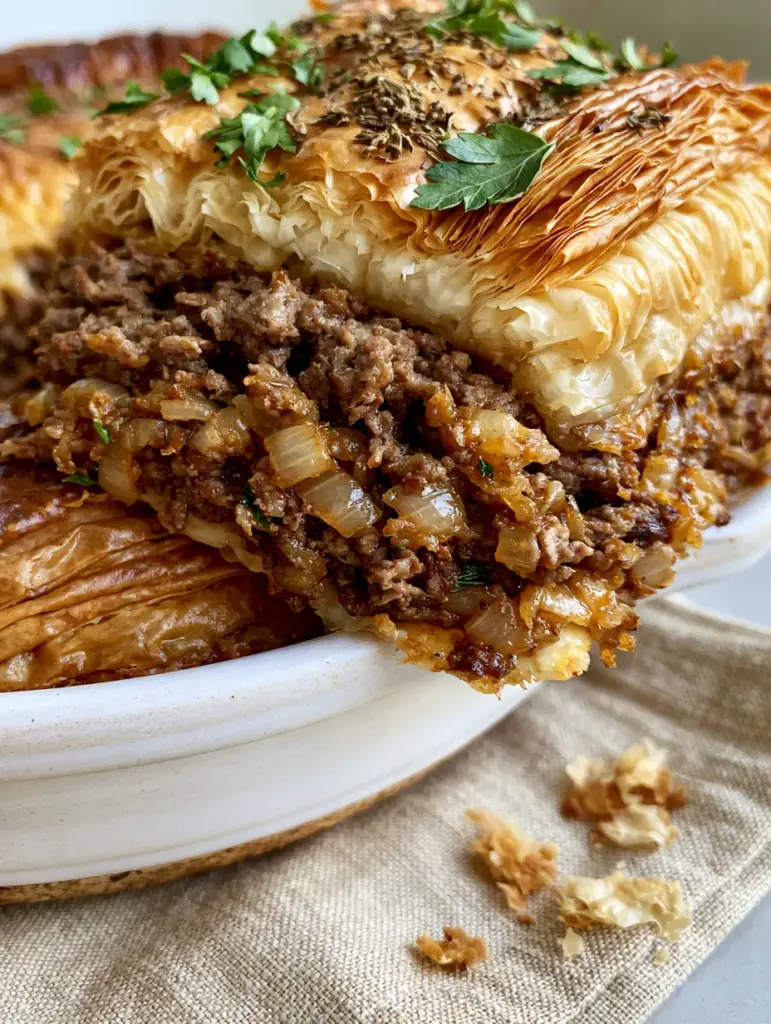
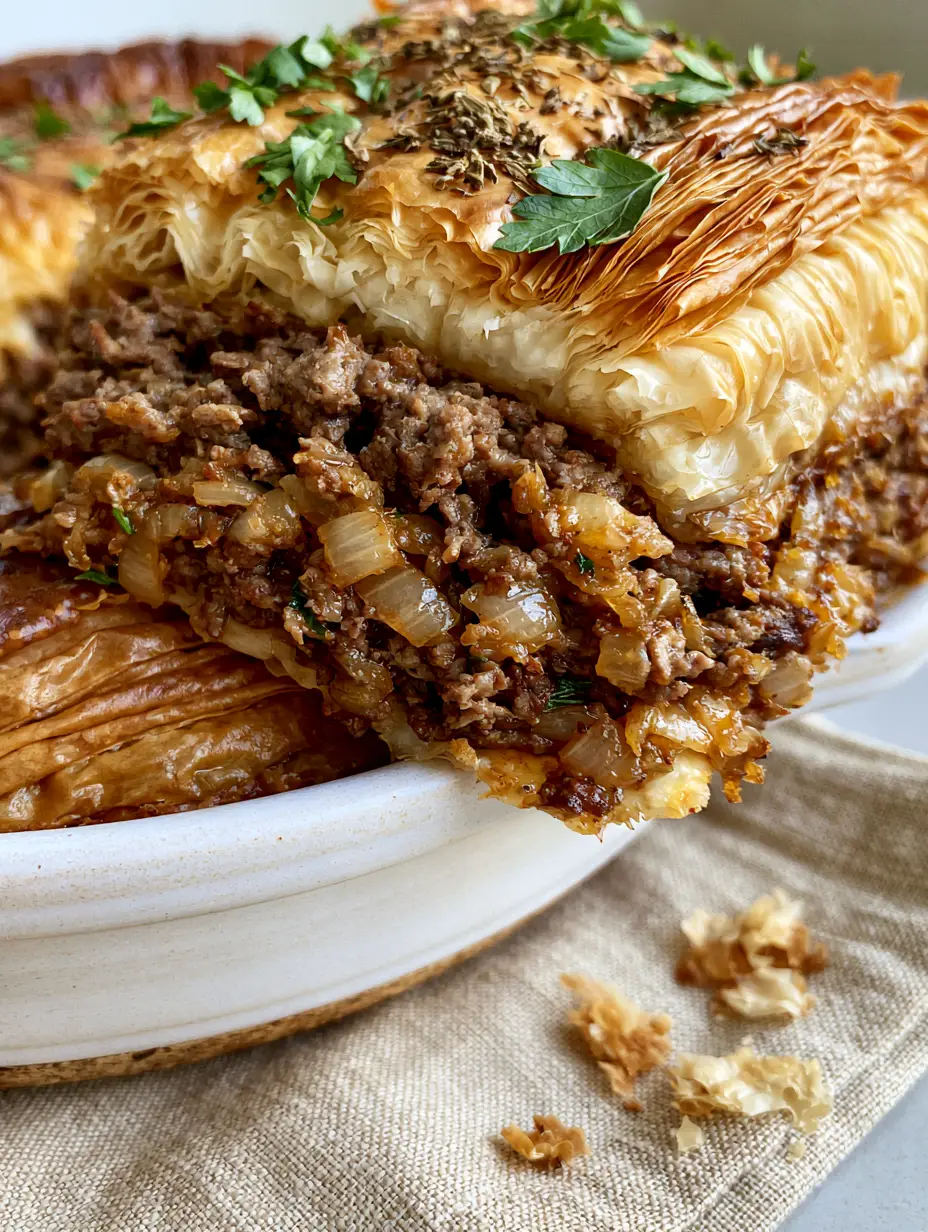
The visual appeal of this dish is undeniable, especially when captured in the soft, natural afternoon sunlight. You can see the glistening melted butter on the top crust and the deep, rich brown of the seasoned ground beef center. Every bite offers a symphony of salty, savory, and buttery notes, punctuated by the brightness of fresh parsley and the earthy aroma of dried Greek oregano.
Whether you are preparing this for a festive family gathering or a cozy Sunday dinner, this Greek Meat Pie stands out as a centerpiece. It bridges the gap between rustic home cooking and gourmet technical execution. Let’s dive into the culinary science of creating the perfect meat pie that looks exactly like a professional food stylist’s dream.
Why This Savory Greek Pastry Will Become Your New Obsession
- The Shatter Factor: By meticulously layering multiple sheets of phyllo with clarified butter, we achieve a top crust that is incredibly light and crisp.
- Robust Savory Filling: We use a high-fat ratio ground beef sautéed with finely diced onions to ensure the center remains juicy, never dry.
- Aromatic Heritage: The combination of dried oregano and fresh flat-leaf parsley provides an authentic Mediterranean flavor profile that cuts through the richness of the butter.
- Rustic Presentation: Baked in a white ceramic dish, this pie transitions perfectly from the oven to a neutral linen-covered table for a beautiful, handheld-photo-ready look.
Essential Elements for the Perfect Savory Meat Filling
To achieve the visual and flavorful results of a true Kreatopita, each ingredient must serve a specific structural and sensory purpose. We do not just toss ingredients into a pan; we build layers of flavor.
1 lb (450g) Lean Ground Beef (85/15): The foundation of our pie. This fat ratio provides enough moisture to keep the filling “juicy” as seen in the side profile, without making the bottom phyllo layers soggy.
2 cups (300g) Yellow Onions, Finely Diced: Onions provide the essential sweetness and moisture. When sautéed until translucent and slightly browned, they meld into the beef, creating a cohesive interior texture.
1 cup (225g) Unsalted Butter, Melted: Butter is the “glue” and the crisping agent for the phyllo. Using unsalted butter allows us to control the seasoning precisely with flaky sea salt later.
1/2 cup (30g) Fresh Italian Parsley, Chopped: These visible green specks are crucial for the visual blueprint. Parsley adds a necessary herbaceous lift to the heavy meat and butter.
1 tbsp (3g) Dried Greek Oregano: This is the signature scent of the Greek Meat Pie. It offers a peppery, slightly bitter undertone that defines the dish’s authenticity.
16 oz (454g) Phyllo Dough, Thawed: These paper-thin sheets are the star of the show. Proper handling is required to ensure they stay “shatteringly crisp” rather than gummy.
1 tsp (6g) Flaky Sea Salt: We finish the top crust with sea salt to catch the light and provide a sharp contrast to the rich, buttery pastry. It creates those gentle highlights seen in the natural sunlight.
Tools for Achieving a Professional Side Profile
To get that perfect “lifted slice” look, your equipment matters as much as your ingredients. A 9×13 inch (23x33cm) rustic white ceramic dish is preferred because ceramic retains heat evenly, ensuring the bottom layers of the Greek Meat Pie brown as beautifully as the top.
You will also need a high-quality pastry brush, preferably natural bristle or high-density silicone. This allows you to apply a “glistening” coat of butter without tearing the delicate phyllo sheets. A heavy-bottomed stainless steel pot or skillet is essential for browning the beef deeply to develop the Maillard reaction.
Mastering the Art of Shatteringly Crisp Phyllo Layers
Developing the Savory Beef Base
Start by heating a large skillet over medium-high heat. Add the ground beef, breaking it apart with a wooden spoon. You are looking for a deep, browned crust to form—this is where the “juicy browned beef” visual comes from.
Once the beef is mostly browned, add your finely diced onions. Sauté them for 8-10 minutes until they are soft and have absorbed the rendered fat from the beef. This step ensures that no raw onion liquid leaches out during baking, which would ruin the pastry.
Infusing the Aromatics
Turn off the heat before adding your chopped parsley and dried oregano. The residual heat is enough to wake up the oils in the dried herbs and wilt the parsley without losing its vibrant green color.
Season the mixture generously with salt and black pepper. If you find your beef has produced excessive liquid, drain it slightly. The filling should be moist but not swimming in fat, ensuring it stays tucked between the phyllo layers.
The Architecture of the Crust
Unroll your phyllo dough and keep it under a damp kitchen towel. Lay one sheet into your buttered ceramic dish, allowing the edges to hang over. Brush lightly with melted butter.
Repeat this process for 8-10 layers for the bottom. This creates the “thick layer of pastry” required for structural integrity. Each sheet must be buttered to create the steam pockets that lead to a flaky, shatteringly crisp result.
Assembly and the Final Bake
Spread the beef filling evenly over the bottom layers. Fold the overhanging edges inward, then begin layering another 8-10 sheets of phyllo on top, buttering every single layer.
Before baking, use a very sharp knife to score the top layers into squares. This allows steam to escape, preventing the pie from becoming “puffy” and ensuring those golden-brown buttered phyllo layers remain flat and crisp. Sprinkle with flaky sea salt for that final professional touch.
Expert Tips for Success
- Temperature Control: Never use hot meat filling on cold phyllo. Let the beef cool to room temperature first to prevent the pastry from becoming soggy instantly.
- The Butter Barrier: Ensure the edges of the phyllo are well-buttered. The edges are the first to brown and provide that “shatter” texture when you take your first bite.
- Defrosting Logic: Always thaw phyllo in the refrigerator overnight. Quick-thawing on the counter leads to condensation, which makes the sheets stick together.
- Visual Cues: Watch for the crust to turn a deep, burnished gold. If it looks pale, it won’t have the crunch. The “shatteringly crisp” texture only arrives with a full bake.
What to Serve With This Savory Pie
This Greek Meat Pie is incredibly rich, so it pairs best with bright, acidic sides. A crisp salad or a side of fresh pico de gallo can provide a zesty contrast to the buttery pastry.
For a more traditional Mediterranean spread, serve it alongside stuffed peppers or a bowl of lemon-heavy summer soup. If you are looking for more “pie” inspiration, our French Meat Pie offers a different but equally delicious take on savory pastry.
Storage, Reheating & Freezing
Kreatopita is best enjoyed fresh from the oven when the phyllo is at its peak crispness. However, you can store leftovers in an airtight container in the fridge for up to 3 days. To reheat, avoid the microwave at all costs—it will turn the pastry rubbery.
Instead, place slices in a 350°F (175°C) oven or toaster oven for 10 minutes until the butter sizzles again. You can also freeze the unbaked pie for up to 3 months. Bake directly from frozen, adding about 15-20 minutes to the total baking time.
Frequently Asked Questions
While you can use puff pastry, the result will be a different texture. Phyllo provides the characteristic ‘shatteringly crisp’ and paper-thin layers that define an authentic Greek Meat Pie, whereas puff pastry is more laminated and airy.
Traditionally, Kreatopita can be made with ground beef, lamb, or a mixture of both. Ground beef with an 85/15 fat ratio provides the best balance of juice and structure for this specific recipe.
To prevent a soggy bottom, ensure your meat filling is cooled to room temperature before assembly. Additionally, using a ceramic baking dish and buttering every single bottom layer of phyllo creates a barrier and helps the pastry crisp up properly.
Avoid the microwave! Reheat slices in a preheated oven at 350°F (175°C) for about 10 minutes. This recrisps the buttered layers without making the pastry tough or rubbery.
Phyllo breaks when it dries out. Keep the sheets you aren’t currently using under a lightly damp (not soaking) kitchen towel while you work, and always thaw the dough slowly in the refrigerator overnight.
The Ultimate Greek Meat Pie (Kreatopita) Recipe
Greek Meat Pie (Kreatopita): The Ultimate Recipe for Shatteringly Crisp Phyllo
Ingredients
Equipment
Method
- In a large skillet over medium-high heat, brown the ground beef until a deep crust forms. Drain excess fat if necessary, but leave enough to sauté the onions.
- Add the finely diced onions to the beef. Sauté for 8-10 minutes until translucent and soft. Remove from heat.
- Stir in the chopped parsley, dried oregano, and salt. Allow the mixture to cool to room temperature.
- Brush the ceramic dish with melted butter. Layer 10 sheets of phyllo one by one, brushing each with melted butter before adding the next.
- Spread the beef filling evenly over the phyllo base.
- Layer the remaining 8-10 phyllo sheets on top, buttering each. Score the top layers into squares and sprinkle with flaky sea salt.
- Bake at 375°F (190°C) for 45 minutes or until the pastry is golden-brown and shatteringly crisp.
Notes
Ensure the meat filling is cooled before assembly to keep the pastry crisp.
Closing & Call to Action
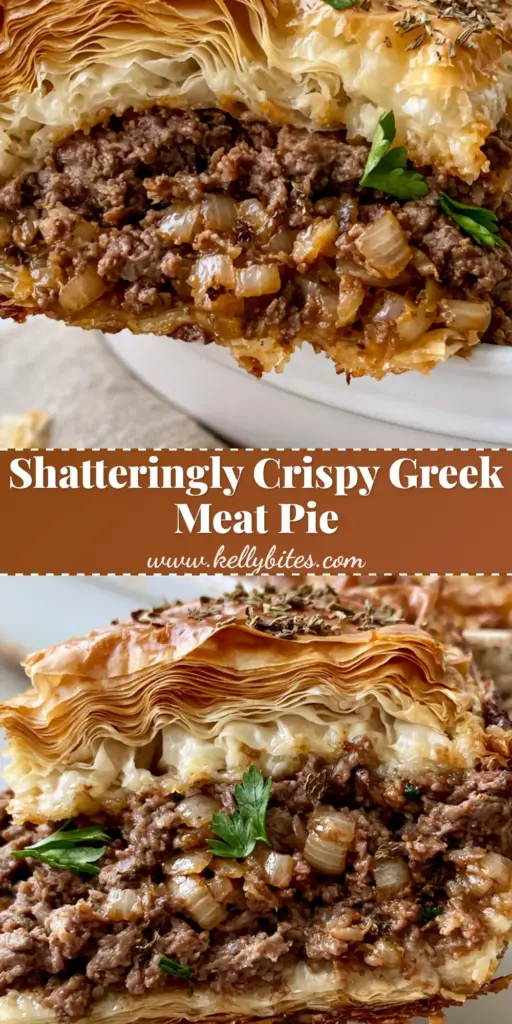
The Greek Meat Pie is a testament to how simple ingredients like beef, onions, and butter can be transformed into something extraordinary through technique. The contrast of the juicy filling against the dozens of paper-thin, crisp layers makes this a recipe you will return to again and again. It’s a dish that looks as good as it tastes, especially when the afternoon sun hits those golden peaks of pastry.
Did your phyllo achieve that perfect shatter? We want to hear about your baking success! Leave a comment below with your tips, and don’t forget to share your photos and follow us on Pinterest for more culinary inspiration and visual recipe guides.