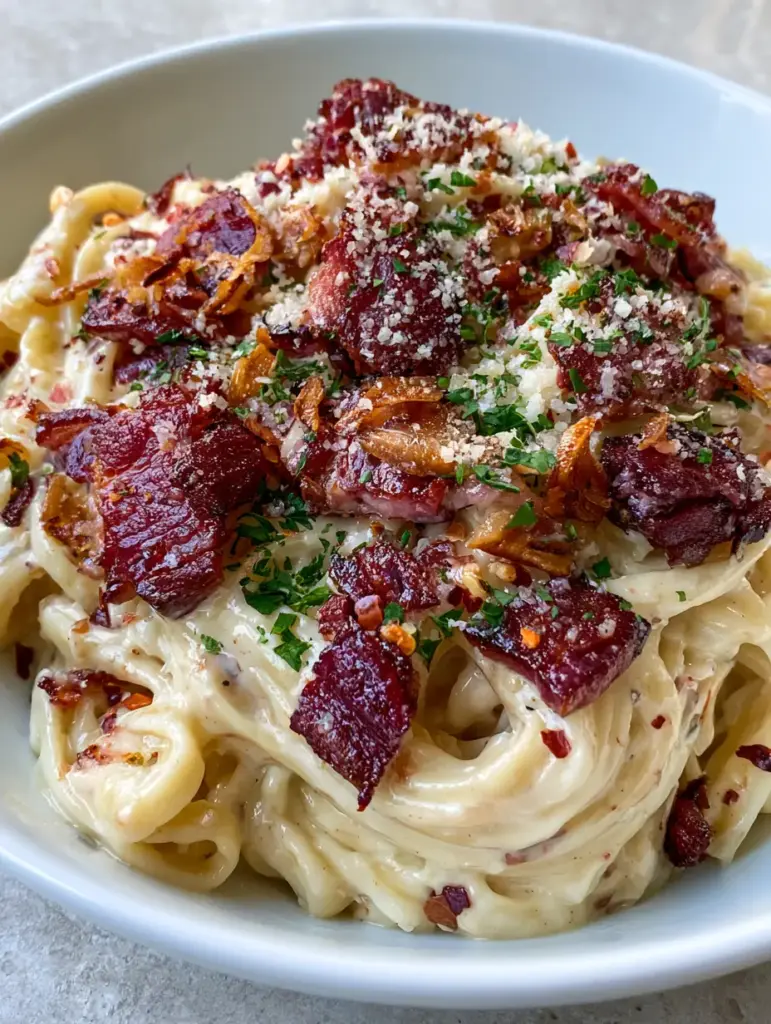
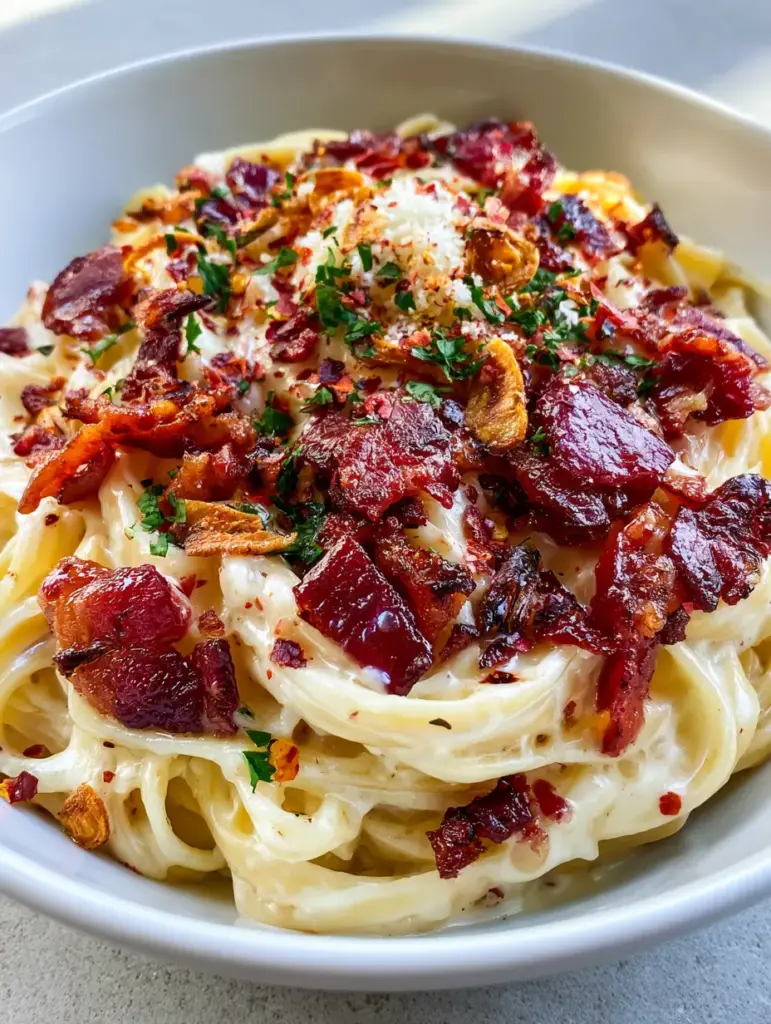
The garlic bacon pasta of your dreams is just 15 minutes away, combining the smoky crunch of thick-cut bacon with a luxuriously smooth garlic butter cream sauce. This isn’t just another pasta dish; it is a masterclass in texture, featuring al dente fettuccine strands that glisten under soft window light in a low-profile white ceramic bowl.
Imagine jagged, deep-reddish-brown chunks of crispy bacon nestled against thin, golden-brown toasted garlic slivers. The contrast between the ivory-colored sauce and the vibrant green flakes of freshly chopped Italian parsley creates a visual masterpiece that tastes even better than it looks.
Whether you are looking for a quick weeknight savior or an impressive date-night meal, this recipe delivers professional results with minimal effort. Let’s dive into the culinary science of creating the perfect emulsion and the secret to those perfectly charred bacon edges.
The Anatomy of an Ultra-Appetizing 15-Minute Pasta
What makes this specific garlic bacon pasta stand out is the meticulous balance of fats, aromatics, and acidity. We aren’t just tossing noodles in cream; we are building layers of flavor that mimic the depth of a slow-simmered ragu in a fraction of the time.
- Visual Texture: The sauce must be silky and glossy, reflecting highlights rather than looking matte or curdled.
- Flavor Contrast: The heat from red chili flakes cuts through the richness of the heavy cream and parmesan.
- Aromatic Depth: Using both melted garlic butter and toasted garlic slivers provides two distinct dimensions of garlic flavor.
- Structural Integrity: Thick-cut bacon ensures the meat stays “jagged” and substantial rather than disappearing into the sauce.
Essential Elements for the Ultimate Creamy Pasta
Every ingredient in this garlic bacon pasta serves a forensic purpose to match our visual blueprint. If you’ve ever enjoyed a classic carbonara recipe, you’ll recognize the importance of high-quality pork fat here.
Fettuccine Noodles (8 oz / 225g): We use thick fettuccine because its wide surface area is the perfect canvas for a heavy cream sauce to cling to. Look for a brand with a rough texture (bronze-cut) for maximum sauce adhesion.
Thick-Cut Bacon (4-5 strips): You need the thickness to achieve those charred, deep-reddish-brown edges while keeping the center chewy and salty. Thin bacon will simply shatter and lose its identity in the cream.
Heavy Cream (1 cup / 240ml): This is the foundation of our silky ivory sauce. Do not substitute with milk, as the fat content is required to prevent the sauce from breaking when heat is applied.
Garlic (5-6 cloves): We split the application. Four cloves are finely minced for the butter base, while two cloves are thinly slivered and toasted to a golden brown for a crunchy, nutty garnish.
Parmesan Cheese (1/2 cup / 45g): Use finely grated, “fluffy” parmesan. This melts instantly into the sauce, providing the necessary salt and thickening power without creating clumps.
Unsalted Butter (2 tbsp / 30g): This acts as the fat medium for our garlic, creating a rich “garlic butter” base that bridges the gap between the bacon fat and the cream.
Fresh Flat-Leaf Parsley: A handful of chopped Italian parsley provides the vibrant green contrast required for a professional-grade presentation. It also adds a necessary hit of freshness.
Foundational Seasonings: Cracked black pepper, a pinch of red chili flakes, and a splash of starchy pasta water (the “liquid gold” of Italian cooking).
The Gear You Need for Professional Results
To achieve the “ultra-appetizing” look of our garlic bacon pasta, you need the right tools to manage heat distribution. A high-quality stainless steel pot or heavy-bottomed skillet is essential for rendering the bacon fat without scorching the garlic.
You will also need a precise vegetable slicer or a very sharp chef’s knife to create those paper-thin garlic slivers. A handheld microplane is the best tool for achieving the “fluffy” parmesan texture seen in high-end food photography.
The Step-by-Step Blueprint for 15-Minute Success
1. Achieving the Perfect Al Dente Foundation
Bring a large pot of heavily salted water to a rolling boil. Add your 8 oz (225g) of fettuccine and cook for 1-2 minutes less than the package directions. We want the noodles to have a firm “bite” in the center because they will finish cooking in the hot cream sauce later.
2. Rendering and Charring the Bacon Chunks
While the pasta boils, place your thick-cut bacon chunks in a cold skillet and turn the heat to medium-high. Starting with a cold pan allows the fat to render slowly, resulting in those jagged, charred edges we see in the visual blueprint. Once deep-reddish-brown and crispy, remove the bacon with a slotted spoon and set aside, leaving about 1 tbsp (15ml) of fat in the pan.
3. Toasting the Garlic Slivers to Golden Perfection
In the same pan with the residual bacon fat, add your thinly slivered garlic. Watch them closely—they turn from golden to burnt in seconds. Once they reach a light tan color and smell nutty, remove them and set them aside with the bacon. These will be our “toasted golden garlic slivers.”
4. Building the Silky Ivory Cream Sauce
Wipe the pan slightly if there are burnt bits, then add your 2 tbsp (30g) of butter and the minced garlic. Sauté for 30 seconds until fragrant but not browned. Pour in the 1 cup (240ml) of heavy cream and bring to a gentle simmer. Whisk in the finely grated parmesan cheese until the sauce is glossy and thick enough to coat the back of a spoon.
5. The Final Emulsion and Swirl
Transfer the al dente fettuccine directly from the water into the sauce skillet using tongs. Add a splash (about 1/4 cup / 60ml) of starchy pasta water. Toss vigorously over medium heat. This action creates a culinary emulsion, turning the cream and pasta starch into a glistening, ivory-colored glaze that clings to every strand.
Expert Tips for Visual and Culinary Success
- The Emulsion Secret: If your sauce looks too thick or “dry,” add another tablespoon of pasta water. This is the secret to the “highlights reflecting window light” mentioned in our prompt.
- Don’t Burn the Garlic: Garlic becomes bitter when it turns dark brown. Aim for a “penny-gold” color for the slivers to keep the flavor sweet and nutty.
- Temperature Control: Turn off the heat before adding the final dusting of parmesan to ensure it melts smoothly rather than seizing into a ball.
- Seasoning Strategy: Bacon and parmesan are both naturally salty. Always taste your sauce before adding additional salt to the finished garlic bacon pasta.
Maximizing Your Meal with Strategic Pairings
While this pasta is a powerhouse on its own, it pairs beautifully with other vibrant dishes. If you are looking for a lighter accompaniment during the warmer months, consider serving it alongside a fresh summer pasta recipe or a bright homemade pico de gallo for a citrusy contrast.
For a full Italian feast, pair this creamy dish with some chicken alfredo style garlic bread. The extra bread is perfect for mopping up any remaining silky garlic cream sauce left in the bowl.
Maintaining Freshness: Storage and Reheating
This garlic bacon pasta is best served immediately to maintain the “glistening” texture. However, if you have leftovers, store them in an airtight container in the refrigerator for up to 3 days.
To reheat, do not use the microwave if possible, as it will cause the cream sauce to break and become oily. Instead, place the pasta in a small skillet over low heat and add a splash of milk or cream. Toss gently until the sauce becomes silky again and the bacon regains some of its texture.
Frequently Asked Questions
Yes, you can substitute the fettuccine with your favorite gluten-free pasta. Ensure you still use the starchy pasta water to help bind the sauce.
No, for the toasted slivers, you must use fresh garlic cloves sliced thinly. Pre-minced garlic is too small and will burn instantly rather than toasting to a nutty golden brown.
Use full-fat heavy cream and keep the heat at a gentle simmer. Avoid boiling the sauce rapidly once the parmesan is added, as high heat can cause the fat to separate.
Start with a cold skillet and thick-cut bacon. The gradual rise in temperature allows the fat to render while the edges crisp up and darken without burning the entire piece.
The starch released from the pasta into the water acts as a natural emulsifier, helping the fat-based sauce and water-based pasta bond into a silky, glossy coating.
The Ultimate 15-Minute Garlic Bacon Pasta Recipe
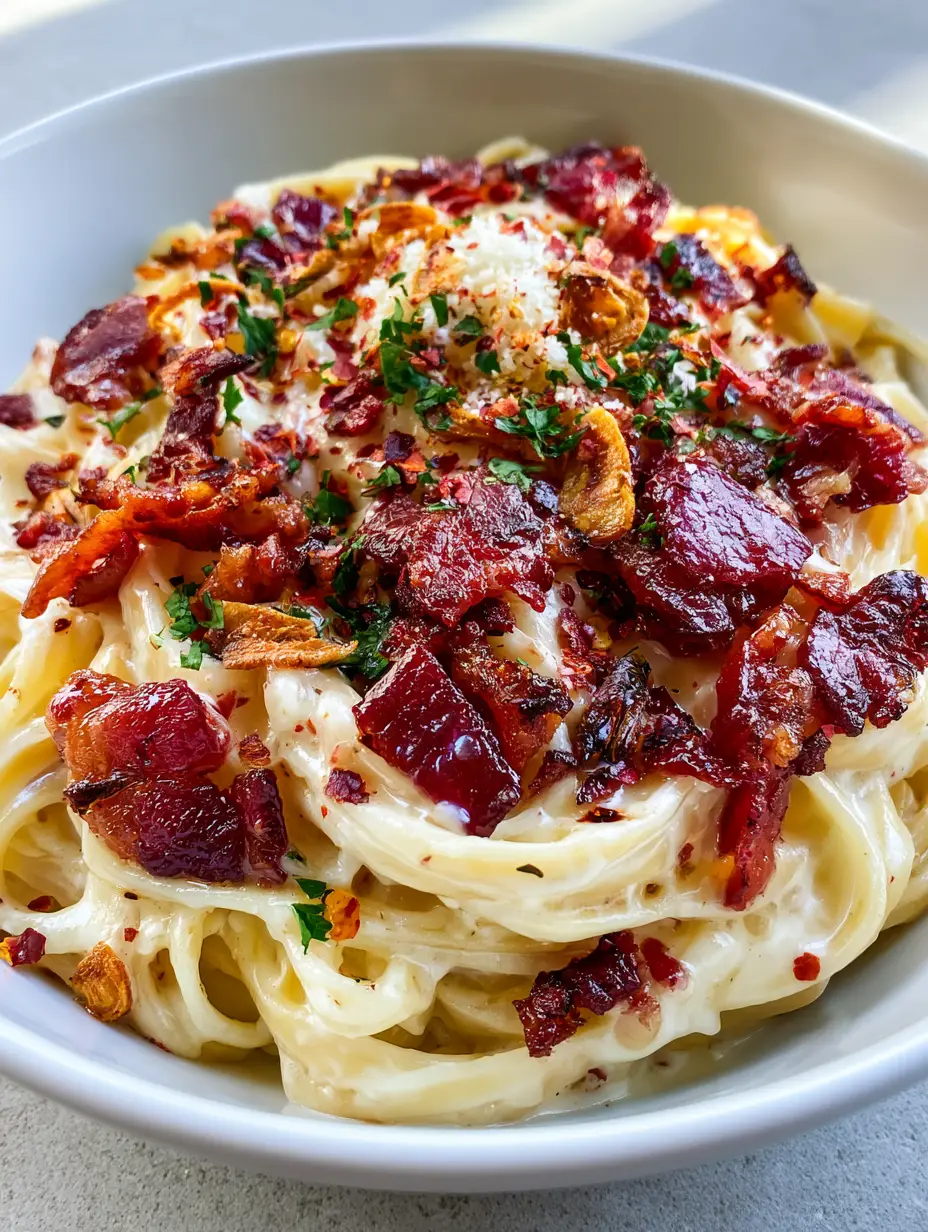
Garlic Bacon Pasta with Silky Cream Sauce and Toasted Garlic Slivers
Ingredients
Equipment
Method
- Boil fettuccine in salted water until 1 minute shy of al dente. Reserve 1/2 cup pasta water.
- Cook bacon chunks in a cold skillet over medium-high until charred and crispy. Remove and set aside.
- Sauté garlic slivers in bacon fat until golden brown. Remove and set aside.
- Add butter and minced garlic to the pan, then stir in heavy cream and simmer. Whisk in parmesan until silky.
- Toss pasta into the sauce with a splash of pasta water. Top with bacon, toasted garlic, parsley, and chili flakes.
Notes
Watch garlic slivers carefully as they burn quickly.
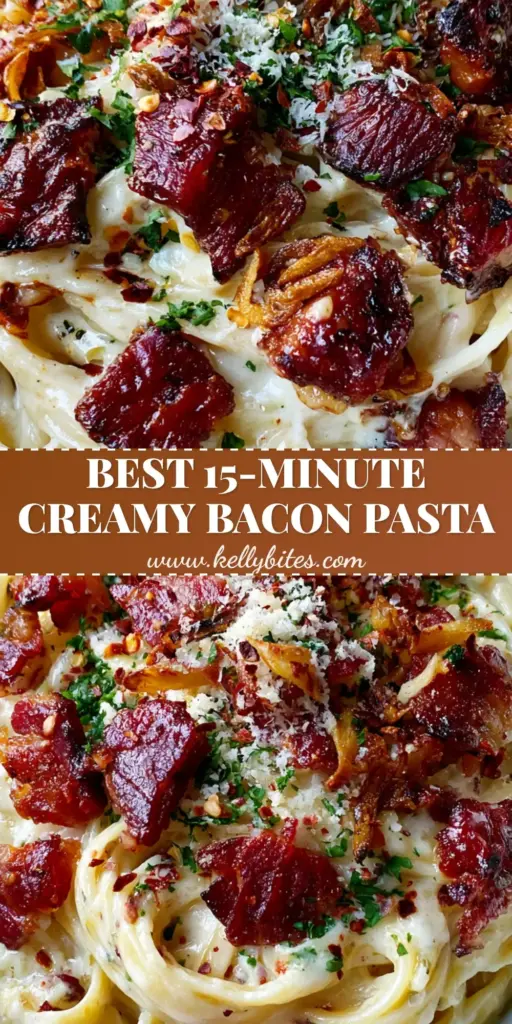
Join the Community and Share Your Creation!
We hope this garlic bacon pasta becomes a staple in your kitchen. The combination of charred bacon and silky cream is a timeless classic that never fails to satisfy a crowd. If you enjoyed this recipe, please leave a comment below and let us know how your toasted garlic slivers turned out!
Don’t forget to follow us and pin this recipe to your favorite boards on Pinterest so you never lose this 15-minute dinner blueprint. For more quick meal inspiration, check out our collection of 30-minute meals.