The perfect Carbonara recipe is the holy grail of Italian comfort food, a dish where the alchemy of four simple ingredients transforms into a luxurious, silk-like masterpiece. To achieve that signature tall, elegant nest of spaghetti, one must understand the delicate balance between heat and emulsion.
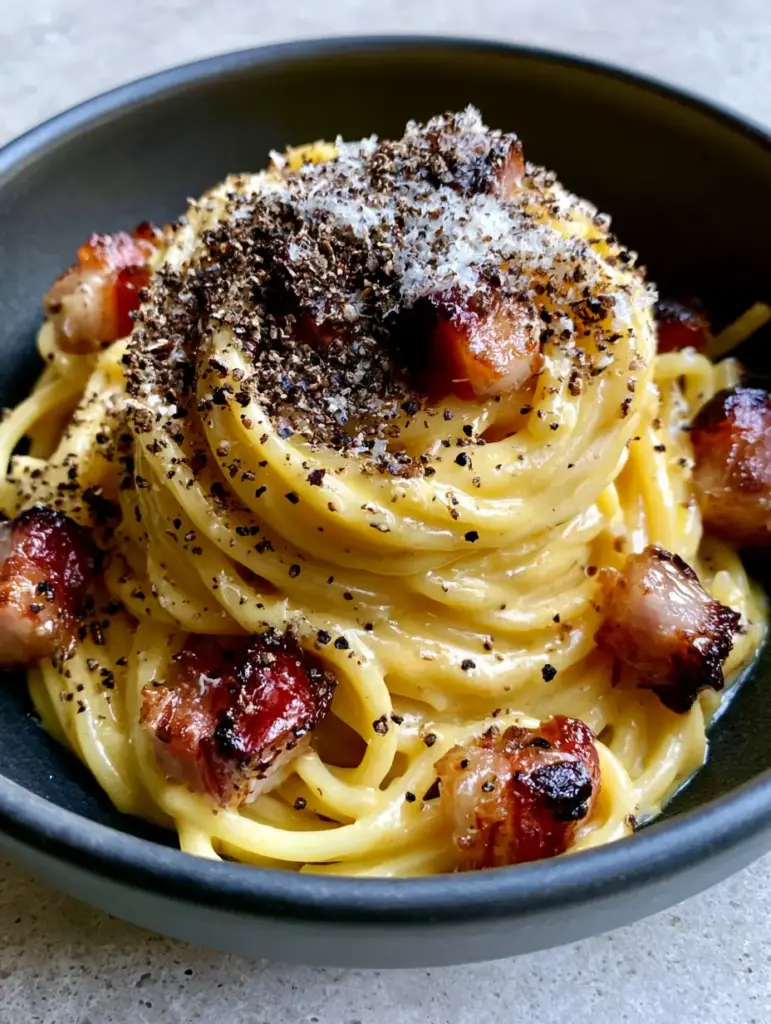
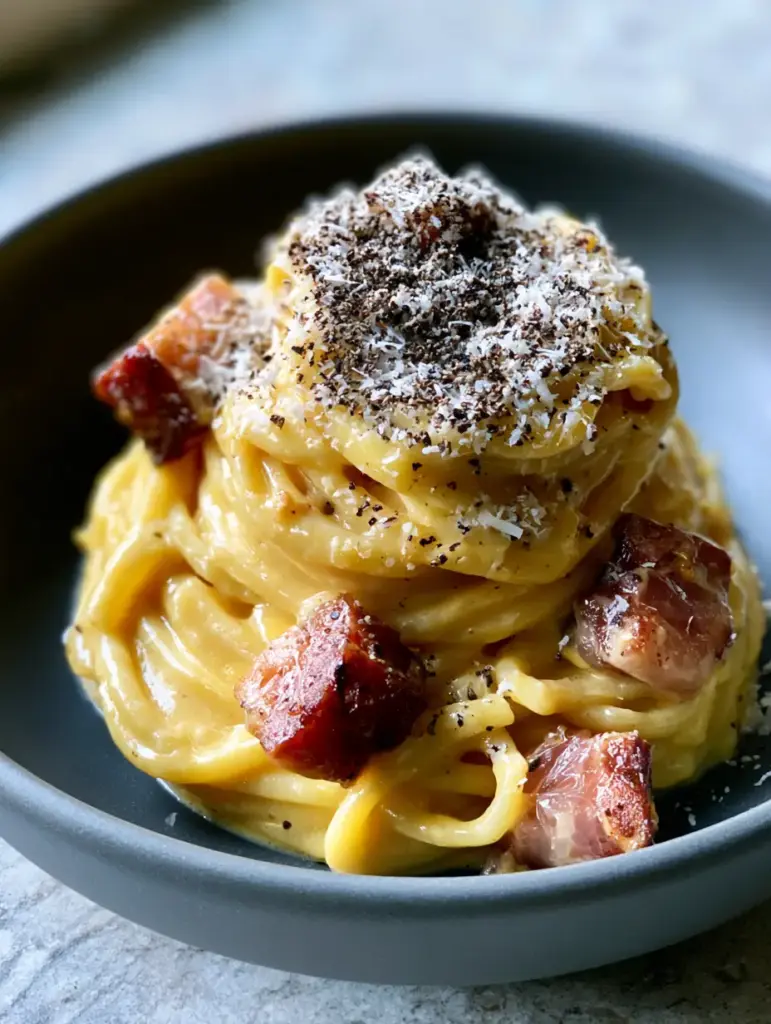
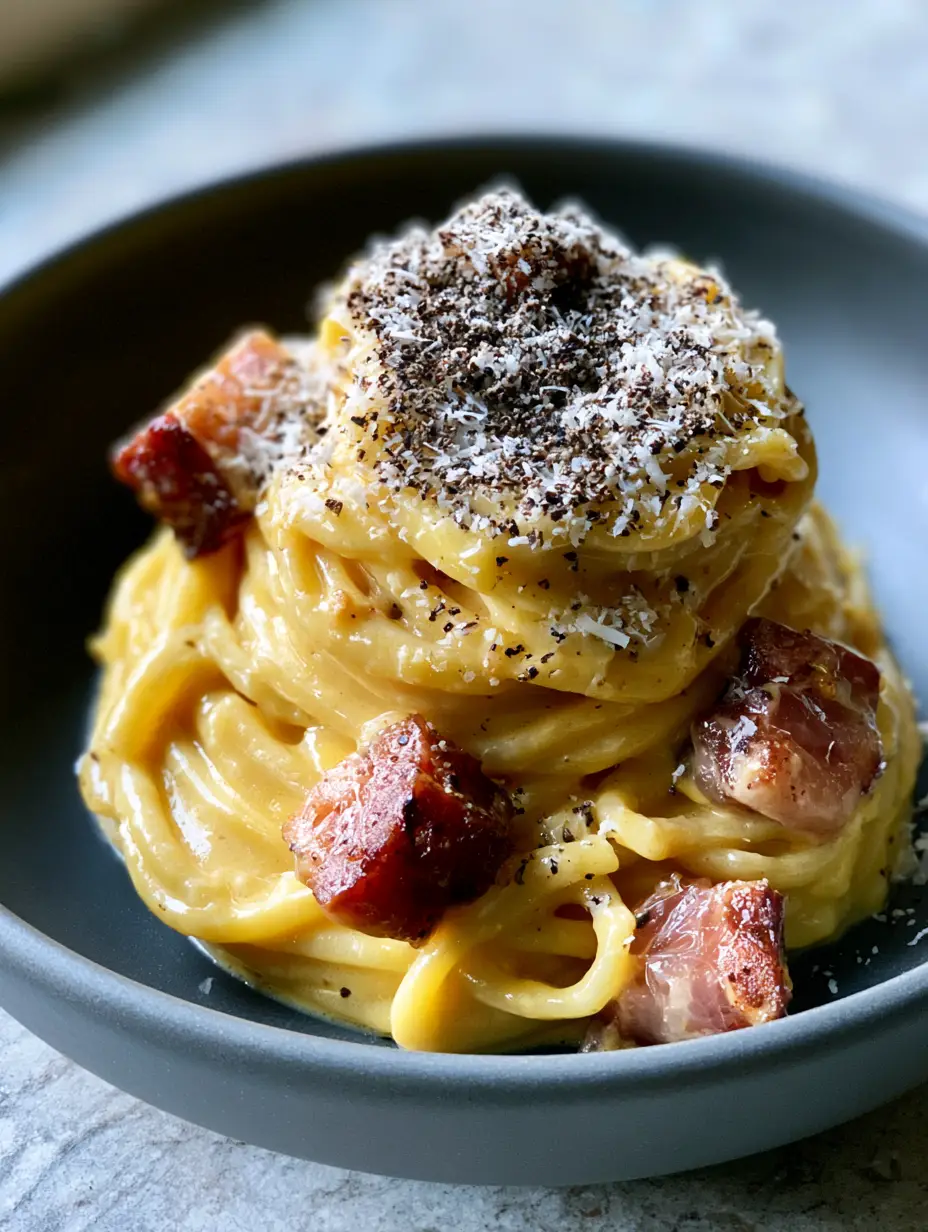
In this guide, we aren’t just making dinner; we are engineering a culinary experience that mimics the high-end matte charcoal ceramic presentations of Rome’s finest trattorias. This is a Carbonara defined by its ultra-glossy, pale golden sauce and those distinctive, thick-cut crispy cubes of guanciale.
Whether you are a seasoned chef or a home cook looking to level up your technique, this deep dive ensures your sauce never curdles and your pasta remains perfectly al dente. Every strand of spaghetti will be coated in a snow-like layer of Pecorino, reflecting soft light just like the professional food photography you admire.
The Visual Architecture of an Authentic Carbonara Recipe
Achieving the visual standard of an elite Carbonara recipe requires more than just following steps; it requires an eye for texture and detail. We are aiming for a specific aesthetic that signals quality and authenticity to anyone sitting at your table.
- The Golden Emulsion: The sauce should be thick, glossy, and pale golden, achieved through the precise tempering of egg yolks and finely grated cheese.
- The Guanciale Contrast: Expect thick-cut cubes with deeply browned, crispy edges and translucent, rendered fat that melts on the tongue.
- The “Snow” Effect: A heavy, rustic dusting of coarse cracked black pepper and a final layer of finely grated Pecorino Romano creates a multi-dimensional texture.
- The Nesting Technique: Using a carving fork to create a tall, structured nest in a shallow bowl allows the sauce to pool slightly at the base, keeping the dish warm.
The Pillars of Ingredient Quality in This Carbonara Recipe
In a dish with so few components, there is nowhere for mediocre ingredients to hide. Each item in this Carbonara recipe serves a scientific purpose in building the final flavor profile and structural integrity.
The Pasta: 1 lb (454g) Bronze-Die Spaghetti
Bronze-die pasta has a rough, porous surface that is essential for the glossy egg emulsion to cling to each strand. Look for high-protein durum wheat varieties that maintain a firm, “al dente” bite even after being tossed in the warm sauce.
The Fat: 8 oz (225g) Thick-Cut Guanciale
Guanciale, or cured pork cheek, provides the soulful funk and essential rendered fat that forms the base of the sauce. Its high fat-to-meat ratio ensures those cubes become translucent and crispy rather than tough and chewy.
The Binding Agent: 5 Large Egg Yolks + 1 Whole Egg
Using a high ratio of yolks is the secret to that pale golden, ultra-glossy finish described in our visual blueprint. The extra whole egg provides just enough moisture and protein structure to prevent the sauce from becoming too heavy or “clunky.”
The Cheese: 1.5 cups (150g) Finely Grated Pecorino Romano
Pecorino Romano offers the sharp, salty tang that balances the richness of the egg yolks and pork fat. It must be grated on a microplane to a “snow-like” consistency so it dissolves instantly into the emulsion without clumping.
The Seasoning: 2 tsp (10g) Coarse Cracked Black Pepper
Freshly cracked pepper is non-negotiable for an authentic Carbonara recipe. Toasting the pepper in the guanciale fat releases essential oils, providing a floral heat that cuts through the creaminess of the dish.
Essential Tools for a Professional Finish
To recreate the handheld smartphone photo aesthetic of a tall, elegant pasta nest, you need a few key pieces of equipment. Utilizing a high-quality stainless steel pot">stainless steel pot is vital for boiling your pasta water to the perfect starch concentration.
A large stainless steel or glass mixing bowl is required for the “bain-marie” style tempering of the eggs. You will also need a sturdy whisk to create the initial paste and a pair of long kitchen tweezers or a carving fork to twirl the spaghetti into those signature elegant nests.
Finally, a shallow matte charcoal ceramic pasta bowl provides the perfect high-contrast background for the golden sauce. This neutral backdrop makes the colors of the dish pop, especially when captured in soft, natural daylight.
Mastering the Art of Roman Carbonara: A Step-by-Step Blueprint
Success in this Carbonara recipe lies in the timing. You must manage the heat of the pasta and the fat to ensure the eggs thicken into a sauce rather than scrambling into an omelet. Follow these sensory cues carefully.
Step 1: Rendering the Guanciale to Perfection
Place your thick-cut guanciale cubes in a cold skillet and turn the heat to medium-low. This slow start allows the fat to render out gradually, turning the cubes translucent before they eventually develop those deeply browned, crispy edges.
Once the fat has pooled and the pork is crispy, remove the skillet from the heat. Toss in half of your coarse cracked black pepper; the residual heat will “bloom” the pepper, filling your kitchen with a spicy, toasted aroma.
Step 2: Preparing the Golden Emulsion
In a large heat-proof bowl, whisk together your egg yolks, the whole egg, and the finely grated Pecorino Romano. You are looking for a thick, pale yellow paste that is completely uniform in texture.
This paste is the foundation of your Carbonara recipe. By mixing the cheese and eggs beforehand, you protect the proteins in the egg, making them less likely to curdle when they finally meet the hot pasta.
Step 3: Achieving the Al Dente Snap
Boil your spaghetti in a large pot of heavily salted water, but pull it out 1-2 minutes before the package directions suggest. The pasta should have a firm white core when bitten into, as it will finish cooking in the sauce.
Crucially, reserve 1 cup (240ml) of the starchy pasta water before draining. This “liquid gold” is the emulsifying agent that turns a dry bowl of noodles into a glossy, restaurant-quality masterpiece.
Step 4: The Off-Heat Emulsification
Transfer the hot spaghetti directly into the bowl with the egg and cheese mixture. Add the rendered guanciale and all of the liquid fat from the pan. Begin tossing vigorously with tongs or a large fork.
Slowly drizzle in small amounts of the reserved pasta water while continuing to toss. Watch for the visual cue: the sauce will transform from a thick paste into an ultra-glossy, pale golden emulsion that coats every single strand of spaghetti.
Expert Tips for a Flawless Carbonara Recipe
- The Temperature Sweet Spot: If the sauce is too thick, add more pasta water 1 tbsp (15ml) at a time. If it’s too thin, place the bowl over the pot of boiling pasta water (off the heat) to gently steam-thicken it.
- Avoid the Scramble: Never add the egg mixture to a pan that is still on the burner. The direct heat of a stovetop is too aggressive for the delicate egg yolks.
- The Grate Factor: Use the finest side of your grater. Large shreds of cheese will not melt evenly and will result in a grainy sauce rather than a smooth emulsion.
- Pepper Precision: Use a mortar and pestle or a pepper mill on the coarsest setting. The large, rustic flakes are essential for the visual and textural contrast.
Storage, Reheating, and the “Freshness” Rule
A Carbonara recipe is best enjoyed immediately while the emulsion is at its peak silkiness. As it cools, the proteins in the cheese and eggs will begin to set, losing that signature gloss described in our visual prompt.
If you have leftovers, store them in an airtight container in the fridge for up to 2 days. To reheat, do not use a microwave; instead, toss the pasta in a skillet with a splash of water over very low heat, stirring constantly to re-emulsify the fats without scrambling the eggs.
Because of the delicate nature of the egg-based sauce, this dish does not freeze well. This is truly a “moment in time” meal that celebrates the immediate transformation of fresh ingredients.
Elevating Your Italian Table: What to Serve Next
While this Carbonara recipe is the star of the show, a well-rounded Italian meal benefits from contrasting flavors and textures. To balance the richness of the guanciale and eggs, consider starting with a bright, acidic appetizer.
A fresh pico de gallo">pico de gallo isn’t traditional, but a similar Italian tomato bruschetta provides the necessary acidity. If you are looking for more pasta inspiration, our light summer pasta recipe“>summer pasta recipe offers a vibrant alternative for warmer months.
For those who love hearty, comforting meals, this Carbonara sits perfectly alongside a spread of classic stuffed peppers">stuffed peppers or a bowl of hearty fall soups and stews">fall soups and stews during the colder seasons. If you’re in a rush, check out our collection of weeknight quick recipes">quick recipes for more 30-minute wins.
Common Questions About Authentic Carbonara
While you can use Parmesan, Pecorino Romano is traditional and provides a sharper, saltier profile that is essential for the authentic Roman flavor of this Carbonara recipe.
Absolutely not. The glossiness in an authentic Carbonara recipe comes entirely from the emulsion of egg yolks, finely grated cheese, and starchy pasta water.
Use a long carving fork or kitchen tweezers to twirl a portion of pasta against a large spoon, then carefully slide it into the center of the bowl.
No. Guanciale is cured pork cheek and has a higher fat content and a distinct herbal cure. Pancetta is a good substitute, but bacon adds a smoky flavor that isn’t traditional.
Scrambling happens when the eggs are exposed to direct heat. Always mix the eggs and pasta in a separate bowl off the stove, using residual heat to create the emulsion.
The Ultimate Roman Spaghetti Carbonara Recipe Card
Carbonara recipe: Mastering the Glossy, Golden Standard of Roman Pasta
Ingredients
Equipment
Method
- Place guanciale in a cold skillet; heat over medium-low until crispy and golden with translucent fat.
- Whisk egg yolks, whole egg, and Pecorino in a large bowl until a thick, uniform paste forms.
- Cook spaghetti in salted water until very al dente; reserve 1 cup of starchy pasta water.
- Toss hot pasta with egg mixture and guanciale fat off the heat, adding pasta water until glossy and pale golden.
Notes
If the sauce starts to clump, immediately add a tablespoon of hot pasta water and whisk vigorously.
Conclusion: The Reward of Technical Precision
Mastering this Carbonara recipe is a rite of passage for any home cook. When you twirl that first forkful of glossy, pepper-flecked spaghetti, you’ll realize that the extra attention to detail—the slow rendering of the guanciale and the careful tempering of the eggs—was worth every second.
We hope this guide helps you achieve that perfect, smartphone-ready pasta nest in your own kitchen. If you enjoyed this recipe, please leave a comment below and share your results with us!
Don’t forget to follow us on Pinterest for more culinary inspiration and visual recipe blueprints. Happy cooking!